Case Study
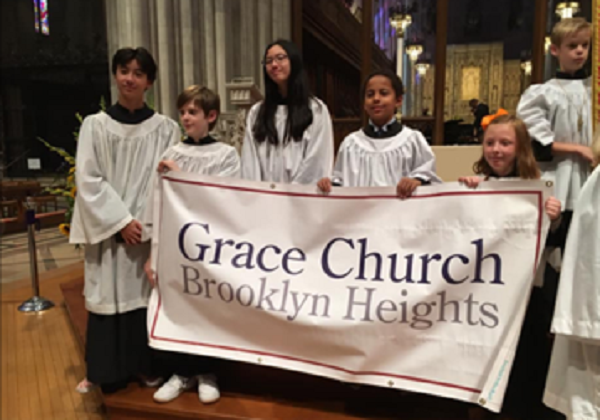
Since its founding in 1848, Grace Church, Brooklyn Heights, has been a vital and vibrant spiritual home both in the immediate neighborhood and beyond the boundaries of Brooklyn—New York City’s most populous borough. For parishioners and friends, Grace Church is a place of respite and refuge. Our mission is to be a spiritual house of prayer for all of God’s people—without exception—and to be faithful to the work of Jesus Christ in this part of the vineyard entrusted to us by God.
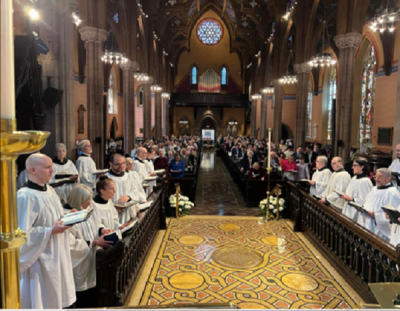 In 2018, the congregation began a year-long period of discernment to learn about our identity as a Christian community of faith and the values present in our congregation’s DNA. Through conversation, reflection, and prayer, the lay and ordained leadership discovered four areas of our common life that not only define who we are as a community of faith but also make incarnate the work we seek to accomplish in Jesus’s name. These core values are: (1) Growing in Faith, (2) Creating an Inclusive Community, (3) Serving with Compassion, and (4) Working for Social Justice.
These four areas guide every aspect of the parish’s mission, both within and beyond the walls of Grace Church. They ensure our faithfulness to God’s call for our parish. As a result of our commitment to our core values and our faithful proclamation of the Gospel, we continue to attract new parishioners and families to the parish.
In Transforming Church, Kevin Ford helps us understand the benefits of engaging in difficult conversations to bring about transformation and renewal within congregational life. Ford writes, “Leaders of transforming churches become skilled at raising competing values—in other words, acknowledging them and bringing them to the congregation’s attention. The clash over values creates acute discomfort, but transforming leaders navigate this, knowing that it leads to change.” Ford goes on to suggest that “having competing values is a good, even necessary thing.”
We live at a time when our nation (and the Church as a microcosm) is highly polarized along religious and political lines. We are fractured by so many ideologies—among them, the unequal distribution of wealth, immigration issues, pro-life/pro-choice positions—such that we often close our ears and hearts to those who espouse views contrary to our own.
Oddly, many of these divisive issues are shaped by our personal religious ideologies and interpretation of scripture. For some, the universal and timeless appeal of scripture includes the movement of the Spirit to interpret the text afresh as each new generation comes of age. For others, true fidelity to God requires strict adherence to the written text, with the slightest deviation a fundamental rejection of faith. And then, of course, there are those who hold varieties of religious viewpoints between these two extremes.
And yet, we are bound by the promise we made at our baptism to seek and serve Christ in all persons, loving our neighbors as ourselves. What might be possible if we shift the goal of difficult and challenging conversations? How might we engage and hear one another differently if the expectation is not conversion to the other side, but rather an appreciation of our differences? How might we respectfully disagree, if we see difference not as a personal threat to our own set of beliefs but as a chance to gain new insights into a perspective different from our own?
In every congregation I’ve served, there have been faithful parishioners who held strong positions on religion and cultural viewpoints counter to those of my own. Engaging in difficult conversations through the lens of faith offers hope for our faith communities and the world by expanding our understanding of the complex relationships existing in the dynamic Body of Christ.
In one congregation, I worked with parish leadership to change the existing model of governance to a much-needed different structure. Many people were supportive of the proposed change, but we also encountered deep resistance and needed to find a way of talking across the divide. So we established the following framework:
First, remember that someone holding an opposing viewpoint is always a sibling in Christ. Despite differing views, they love God, the Church, and the community just as much as you do.
Second, engage with openness and the desire to hear and learn, not the need to prove your point or justify your position. The more open we become to genuine learning from others through difficult conversations, the clearer we can be about our own faith, convictions, and sense of identity.
Lastly, end each conversation with an agreement to pray for 30 days for understanding and insight. Remember, our goal isn’t to change viewpoints, but to appreciate and respect of the dignity of each human being and to love one another despite our divisions.
This three-point process of engagement was, I believe, the beginning of many life-giving, healthy, wholesome conversations for personal, spiritual, and communal growth.
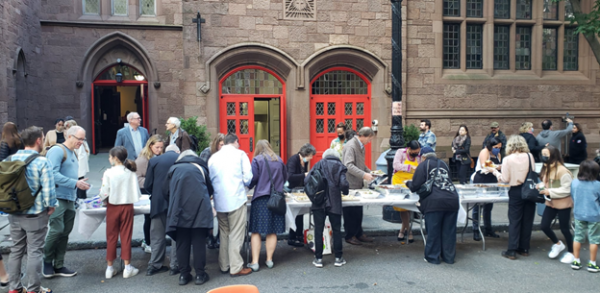
We engaged in difficult conversations, implemented the new model of governance, and committed to learning something new from the other side. And guess what? We figured out that although we might hold divergent viewpoints, there was no doubt that we were all on the same team!
At the heart of resistance (aside from trying to comprehend a new approach to leadership) was the fear of being directly associated with possible failure. Unlike the model “of the whole,” where everyone and no one was responsible, the new model easily connected a lay leader to a ministry that might not function at peak performance—and that was scary. But by bringing it out into the open and committing to understanding one another’s viewpoints, we found a way forward.
Once the congregation understood that ministry isn’t “one size fits all” and that the church needed to change with the times, new possibilities opened for us: It allowed for creativity among clergy and laity, it made room for leaders to take bold risks without fear of blame, and it offered a model for how to approach such difficult conversations in the future.
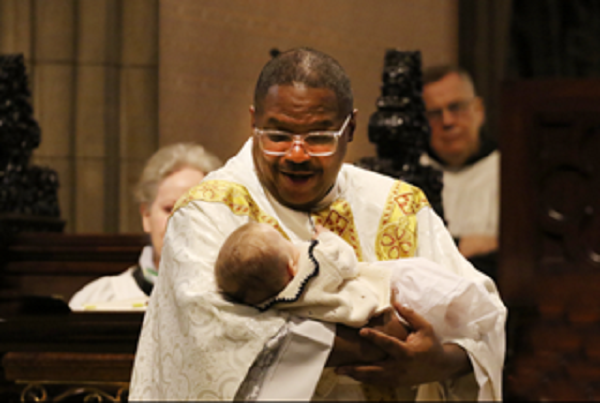 The 15th Rector of Grace Church Brooklyn Heights, the Rev. Dr. Allen F. Robinson is a native of Galveston, TX, where he grew up attending St. Augustine of Hippo Episcopal Church. He is a gifted and passionate preacher and teacher and serves as a coach on congregational vitality. Dr. Robinson holds a Bachelor of Arts degree in English Literature from St. Augustine University, Raleigh, NC. He was ordained in the Diocese of Texas in 1995 after receiving his Master of Divinity degree at the Virginia Theological Seminary. In 2007, he earned a Doctor of Ministry degree, with a dissertation on congregational development, from Fuller Theological Seminary, Pasadena, CA.
Previously, Dr. Robinson served as Rector at St. James’ Church in Baltimore, Maryland. He has also served as an Associate at Calvary in Memphis, TN and an Assistant to the Rector at St. Dunstan’s and St. James’ Churches, both in Houston, TX. Dr. Robinson is active in the Episcopal Diocese of Long Island and the Brooklyn Community, currently serving as President of the Long Island Black Caucus, member of the Commission of Ministry, member of the Board of Trustees at St. John’s Episcopal Hospital, and the Board of Directors at the Dodge YMCA. He enjoys reading, model trains, and traveling. Allen and his wife Allison are proud parents of Keenan, Leyla, and Philip.