March 2007
Christian Formation
Why Get Fired Up?
Why get fired up about “Christian formation?” Why put our education as Christians high up on your agenda as a vestry member if you’re worried about the stewardship campaign, the budget and the proverbial leaking roof? Simply because what we know about the faith and how we practice it may make or break our effectiveness as leaders.
Growth is a priority, large or small
What we’ve usually called Christian education or adult education — the trend now is to call it “formation” — is also usually thought of as “program.” You won’t get far without knowing and agreeing on who makes program in your parish. The answer to this usually varies with size. Large parishes often have clergy or lay staff who design courses and teach them, but you can tell a lot about a small parish if it supports a professional approach to education.
Some smaller parishes consciously construct a vestry to include people who can not only oversee programs, including education, but also run them. Some terrific vestries are like a multiple staff as much as they are like a nonprofit board. It’s a struggle for large parishes to keep growing and smaller or medium size parishes to grow as large as possible, and I assume growth to be a priority. That struggle is intensified when there is no clarity of purpose. Vestries are first and foremost governance bodies, with oversight and fiduciary responsibility, and with the solemn spiritual authority of advising and evaluating the rector and of selecting and calling a rector when needed. They are not primarily program committees. necessity of Christian formation. That will mean at minimum some budget support. It may also mean helping the rector do the work of education itself. Just try to be clear about who’s who and what’s what.
Finally, a presumption I bring to all thinking about church leadership is that the church is called to grow. In particular, the Episcopal Church needs to grow in order to find a better balance between institutional survival and mission. We could unleash real power to serve if we weren’t so anxious about paying the bills and equipping and maintaining buildings.
There’s also a neat complement to the numerical growth when we talk about education or spiritual formation. We are also called to grow in spiritual depth. We do that by learning more, practicing more and serving more. How we do those things depends on being formed and taught to
do them. A rock-bottom minimum education program in a parish would be some sort of conscious preparation for baptism (including parents and sponsors) and some sort of (at least) annual inquirers’ or newcomers’ course.
People want to belong
With these, my parish tries to keep two fundamentals in mind: First, offer the introduction to the faith experience (in whatever format) more than annually; in fact, offer it as often as you possibly can. Nothing is a greater turnoff — or more common impediment to growth — than to greet enthusiastic newcomers with, “Yes we have a course for you, but you’ve just missed it. How about a year from now?” What business or organization do you know that would tolerate such a lag time in incorporation? Second, put your clergy and top lay leaders (including vestry) on the front lines as teachers and welcomers. People want to belong. They want relationships every bit as much as they want content. Or, to put it another way, the lifesaving content of the gospel is most compelling, and in fact, can only be transmitted by people who are giving themselves as examples.
Your deepest possibilities
Don’t overlook your deepest possibilities for the formation of leaders. Around the vestry table we unlearn some particularly magical thinking. The church may be the house of God’s Holy Spirit, but it isn’t the Kingdom of God on earth. All the marks of human finitude and human sin are present. Or, as Pogo said, “We have met the enemy and he is us.”
Wrestling with finite resources and the big dream of answering God’s call to mission takes us right down to the foundations. Coming to know both our own gifts to lead and also acknowledging our limitations brings close the “who am I and who is God” question, surely a starting point for both education and leadership.
The gospels give us a glimpse of Jesus who taught occasionally by storytelling and preaching, but who taught even more powerfully by the challenges he gave, the call he issued, and the work he did with the disciples.
Just think how he would have balanced the leaking roof, the annual campaign, the healing of souls, and the call to respect the dignity of every human being.
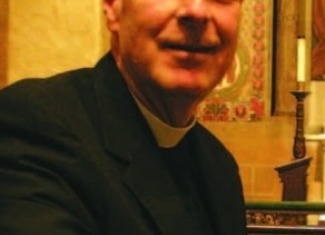
The Rev. William McD.Tully is rector of St. Bartholomew’s, New York City, where principles and practice of church growth and radical welcome are packaged into an annual ReinventingChurch conference.
This article is part of the March 2007 Vestry Papers issue on
Christian Formation
Don't miss an issue! SUBSCRIBE
 Save
Save Issue
Issue-

Related Webinar
Clergy Compensation: Speaking the same language