October 21, 2013
Purposefulness
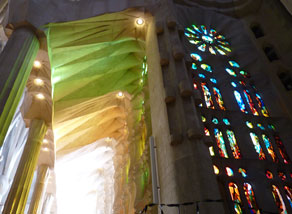 This past week I was on vacation in Barcelona, where I visited the Sagrada Familia, a beautiful and somewhat strange church designed by Antoni Gaudi. Even though the church, especially the exterior, can feel a bit overwhelming, with its many statues and windows, nothing feels extraneous. Everything in the church has meaning, from the shape of the columns to the color scheme of the stained glass windows to the number of spires. Each arch and angle has been carefully measured so that the huge interior is not only pleasing to look at, but can hold up the thousands of pounds of stone and glass.
I think this kind of purposefulness is something we should strive for in our own ministries and liturgies. Of course, most of us aren’t building cathedrals. Instead we are creating liturgies to worship God and programs to create community and minister to those in need. But every liturgical act or new program should have a clear intention behind it. We should always be able to answer the question, “Why did you do that?”
Fortunately we have the prayer book, which includes liturgies bolstered by theology and centuries of practice. We in the pews may not know the exact meaning of every act in the service, but we know that if we were to ask, we would discover a reason for it. We know that our liturgy comes from a long history and a communion that has struggled to come up with a meaningful and purposeful liturgy.
This doesn’t mean we always agree, of course. Gaudi is a polarizing architect, and people have strongly disagreed about the prayer book each time it is revised. Rather, a healthy community should be able to trust that it’s leaders have thoughtfully and prayerfully considered each new ministry or change within the community, whether it’s homeless outreach, removing the chairs from the sanctuary, or a decision to start a capital campaign. That if they ask “Why?” there will always be an answer.
 RSS Feed