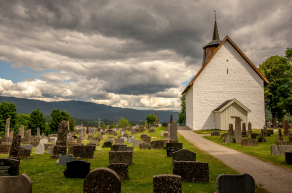
Churches celebrate milestones in many ways—new ministries, baptisms, confirmations, and anniversaries. But what about the legacy of generosity that sustains the church through generations? That's where Legacy Sunday comes in.
Continue reading...

My wife and I opened a Donor Advised Fund this year and it has changed our relationship with charitable giving.
My first question when our financial advisors recommended that we use a Donor Advised Fund was: What is a Donor Advised Fund?
In short, a Donor Advised Fund is an account that you open with a charitable foundation (including the Episcopal Church Foundation!*) to manage your giving. You give to the Donor Advised Fund when it makes sense for you to do so, usually for tax reasons, and then you “advise” the foundation when you want to disburse some or all of those funds to a charitable organization like your parish church. Donor Advised Funds are especially helpful if your income varies from year-to-year but you want to offer consistent support to your church – we should all want to give generously and consistently to our churches! – and to the other organizations you care about.
Continue reading...

I noticed something after my first stewardship campaign as a rector: Many of my parishioners were making their gifts through stock transfers, distributions from retirement accounts, or grants from donor advised funds and family foundations. They weren’t just writing checks from their bank accounts like I was.
At first, this all seemed curious but unimportant. Who cares how someone makes a gift so long as they make it? Yet, I soon came to realize that understanding our parishioners’ structures of giving made me a much more effective fundraiser and, frankly, a much more effective pastor too.
Continue reading...
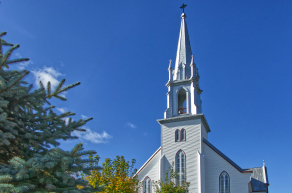
The vestry gathers for their monthly meeting. On the agenda: a proposal establishing an endowment fund to help secure the church’s long-term future. Some vestry members express enthusiasm, recognizing the potential for financial stability. Others, however, are hesitant. “If we start an endowment, won’t people think they don’t need to contribute to the stewardship campaign anymore?” one member asks. Another adds, “I’ve seen churches that became so reliant on their endowment that they stopped prioritizing stewardship altogether.”
Continue reading...

2025 could be a great time for you to maximize your charitable giving through a Donor-Advised Fund (DAF) before new limits on charitable deductions go into effect in 2026.[1] Bundling multiple years of charitable gifts into one 2025 DAF deposit can help you maximize your deduction benefits and position you to sustain your annual charitable commitments through grants from your DAF in the years to come.
As we turn toward the end of the year, let’s consider how setting up a DAF with the Episcopal Church Foundation (ECF) can help you achieve your charitable giving goals for 2025 and beyond. Here’s some of the top benefits you can receive by setting up an ECF DAF in 2025:
Continue reading...

Our congregations are diverse - spanning multiple generations, different financial circumstances, varying interests, and different ways of connecting with the church's mission. The most effective approach to encouraging church giving, whether it is annual giving or endowment giving, isn't implementing a one-size-fits-all approach — it's about meeting each donor where they are in their giving journey and making it easy for them to support the church and the ministries that matter to them.
Continue reading...

As the calendar year draws to a close, church leaders have a special opportunity to encourage year-end charitable giving. Not only is this a time when parishioners are reflecting on their faith and generosity, but it's also a moment when they may be considering how their gifts can leave a lasting legacy. For churches managing endowments, the end of the calendar year presents an especially powerful time to invite contributions that will support the mission of the parish for generations to come.
Continue reading

Year-End Giving is a wonderful opportunity to:
harvest the loyal generosity of established members of your faith community
build a stronger bond with those who are growing in commitment to your parish
inspire new gifts from those who are becoming acquainted with your ministry
Here’s a few ways you can make the most of this important season of provision in the annual life cycle of your congregation:
Continue reading...
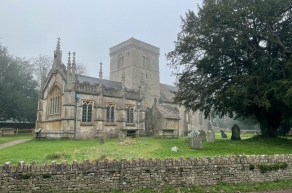
Can I buy my church?
About ten years ago, the longtime rector of a nearby parish retired. She’d served well and faithfully for nearly 20 years in a part-time capacity, but the congregation’s numbers, which were never great to begin with, had dwindled. Lay leaders were concerned about the congregation’s future. Understandably so, I’ll add.
One day, nearing her retirement celebration Sunday, a wealthy retired physician – a member of the vestry and parish who had deep, deep connections to the church and whose family was buried in the churchyard invited her to lunch. “Reverend Mother,” he said, “I’d like you to set up a meeting with the Diocese.”
“What for?” she asked.
“I’d like to buy the church.”
Continue reading...

Representatives of the congregation bring the people's offerings of bread and wine, and money or other gifts, to the deacon or celebrant. The people stand while the offerings are presented and placed on the Altar.
Book of Common Prayer p. 361
It’s called the Offertory.
When I was a child, my mother would hand me a quarter to drop in the plate that was passed along the pew, adults would add greenbacks, or maybe a check. We don’t see (or hear) that much anymore. Especially since Covid. Now a lot of folks pay their pledges online. Or in some churches, they use a QR code printed in the bulletin to make an offering. Other churches have a place to put checks on a Sunday morning, but don’t process them forward. Still, the Offertory often includes an anthem sung by a choir. In many churches, there is a hymn sung by the congregation in addition or instead. And in some, The Doxology still rings out.
Continue reading...

Fundraising is on the long list of things that I never learned anything about in seminary. Or, so I would have told you several years ago. My congregation’s recent fundraising experiences have taught me that I learned a lot about fundraising in seminary, because the principles of effective pastoral fundraising are the same as the principles of effective pastoral care that I learned in seminary and that I continue to hone today.
Principle 1: Focus on the needs of the other person.
Effective pastors know how to keep the conversation focused on the other person, they know how to listen more than they speak, they know how to tolerate silence, and they know how to refrain from judgment. Effective pastoral fundraisers should display the same characteristics. Effective pastoral fundraising is not focused on the church, but on the giver. The goal is to make the giver feel good about her gift, and to create an opportunity for her to impact the future of her church.
Continue reading...

On sabbatical this past spring, I walked to the village of Grantchester from Cambridge. Turns out, Grantchester is very much a real village, not just a lovely PBS series. “Go to the Blue Ball,” the docent at Kings College told me when I asked for directions; “that’s the best pub.” The walk was lovely, and the inn’s hospitality and lunch were spot on.
Walking out into the afternoon sun, I saw on the wall a cartoon drawn of some characters in the village circa 1980-something: there was the barman; and a number of other characters, some in business attire, some in work clothes; and then, near the center, was a balding man in a backwards collar on a black shirt: the vicar.
Continue reading...

As we recommit to Stewardship each season with a focus on time and talent, let us reflect on our individual level of participation in the church’s organizations/committees/guilds or ministries. A church colleague highly recommends that we use the word ministries more often in order to 1) distinguish it from the secular organizations’ processes and mindset we adhere to and 2) to continually remind ourselves that any work we do in the church should be in service to Jesus Christ and his teachings. I agree.
On one end of the participation range, there are some in the church that can be described as oversubscribed. They belong to every organization and are either burned-out with too many meetings and commitments or they are participating in name only and do not contribute in any meaningful way. Oftentimes in smaller congregations, oversubscribing can occur with few members that need to wear multiple hats. This situation is increasingly common and challenging.
Continue reading...

And I’m not referring to Christmas but the annual pledge campaign for your congregation. Actually, this can be a wonderful time of the year if you, the church’s leadership, approaches the campaign with faithfulness, focus and follow-through.
Faithfulness needs to emanate from the top and permeate the life of the local congregation all year round not just when you’re asking for money in the fall. Being faithful involves ongoing communication with your members and constituents; offering quality worship, fellowship, and outreach opportunities; helping people discern their gifts, and engaging them in appropriate ministries and activities. Faithfulness includes sharing your personal faith journey, reflecting on the importance of the local faith community in nurturing your own spirituality, inviting others to join you on the way, and helping form disciples for Jesus. Faithfulness leads to commitment, commitment leads to embracing stewardship, and stewardship leads to generosity and giving. Even if you’ve been a little lax in this area over the past several months, this is the ideal time to be more deliberate about faithfulness.
Continue reading...

We all love stories. Storytelling is imbedded in our DNA as human beings. Stories were used to explain the unexplainable—those mysteries such as birth, death, nature and the existence of a higher power or force, eventually described as God.
People of faith, or those who follow or practice a particular religious tradition are especially fond of stories. Jewish and Christian heritage and custom have been passed down to us through stories—about creation, sin, floods, slavery, freedom, laws, prophets, angels and, ultimately, redemption and resurrection.
While we love to tell stories, we also love to talk about ourselves, especially those qualities and experiences of which we are most proud. Telling our story is an essential element of the human experience and is the precursor to making connections, establishing relationships, and falling in love.
Continue reading...

This month we offer five resources on Transformational Stewardship. Please share this digest with new members of your vestry and extend an invitation to subscribe to ECF Vital Practices to receive Vestry Papers, blogs, and the monthly digest.

With the consulting work our firm performs across the nonprofit philanthropic spectrum, my involvement as an active volunteer for the Diocese of Atlanta, and the changes wrought by the last two years of COVID-19, a number of my worshipping friends have inquired about what my predictions are for the Church. With both “fear and trembling” and wild abandon, I offer the following.
First, I think there will be a growing demand for churches to raise the funds necessary to increase the production value of their virtual presentations. As with retail companies, both the storefront and online platforms combine to sustain their business model. Similarly for churches, both physical structures and virtual offerings will work together to feed the members of faith communities. And particularly with regard to the younger, “digital native” members and prospective members, virtual attendees will not long tolerate bad connections or poor visuals before moving to a video game or social media site. It will be a challenging assignment for The Episcopal Church to maintain one’s virtual attention. As an example, standing in line for the Eucharist during worship is not “made for prime time” viewing at all. But interesting, informative pre-recorded virtual segments can hold viewers’ attentions until, say, the choir re-enters the worship service picture. None of the production changes needing to be made will come cheaply.
Continue reading...

Imagine that you had a time machine.
Imagine that you could travel back in time and talk with the leaders of your own congregation two or three generations ago. Imagine that you could give advice to your predecessors in a time when sustainability was assumed, pews were full, and every Sunday school was teeming with children. What would you say?
I spent my recent sabbatical asking this question of church leaders in highly secular contexts. My goal was to learn what congregations that are currently in positions of strength might do now to prepare ourselves for a future ministry context that will likely look very different from the one we now know.
Continue reading...

This month we offer five resources on stewardship and abundance. Please share this digest with new members of your vestry and extend an invitation to subscribe to ECF Vital Practices to receive Vestry Papers, blogs, and the monthly digest.
Continue reading...

Dear friends,
For over a year, we as a church, a nation, and a world have been challenged like never before. But as people of faith, we are confident that God is in our midst and that nothing can separate us from God’s love. I have been amazed and encouraged by the creativity, resiliency and flexibility demonstrated and witnessed by Episcopal faith communities like yours. Our congregations have embraced new ways to worship, gather and engage with our local communities. And throughout this entire period, the Episcopal Church Foundation (ECF) has been there with you - striving to live into our mission of leading Episcopal faith communities into the future as a partner for transforming ministries. We did this by nurturing, supporting and inspiring lay and clergy leaders throughout the church.
Continue reading...
 RSS Feed