March 8, 2011
La Bonne Cuisine: A Mortgage and a Mission
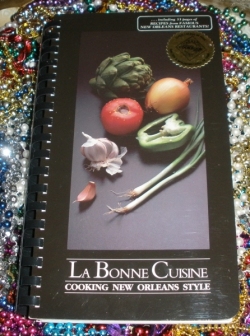 Last week, I stumbled across an article about a New Orleans native, now living in California, who is an advocate for Cajun cuisine and Mardi Gras. The article is a fun read in its own right – it includes an aside on the origins of Creole culture – but what really caught my attention was a tiny detail included toward the end of the article: “While Crouse doesn’t use recipes, she does suggest the following cookbook: La Bonne Cuisine, Cooking New Orleans Style by the Women of All Saint’s Episcopal Church.”
One quick Google search later and wouldn’t you know? Since it was first published in 1980, La Bonne Cuisine has become a milestone in authentic New Orleans cooking. This is inspiring in and of itself, yet the story is even richer from a congregational perspective. In the end, La Bonne Cuisine is also the story of a newly formed parish with a hefty mortgage to pay off, a sense of mission, and an entrepreneurial spirit. (The following is excerpted from the All Saints parish brochure and website.)
After receiving the go-ahead from the wider congregation, members began submitting recipes as other parishioners “ate their way through each trial dish at least three times – and gained at least five pounds in the try-out phase!” The cookbook was finally ready in 1980 and shortly after La Bonne Cuisine became an incorporated arm of the Episcopal Church Women of All Saints Church.
By 1989, La Bonne Cuisine had sold 100,000 copies. Shortly after, the Episcopal Church Women made a $100,000 dollar contribution to pay off the church mortgage. The congregation would later gather in the sanctuary to “burn the mortgage.”
La Bonne Cuisine continues to support the mission and ministry of All Saints to this day. Two additional cookbooks have been produced - Cooking New Orleans Style and Lagniappe. Proceeds now exceed beyond $260,000 and go toward mission in the Diocese of Louisiana including the Solomon Episcopal Conference Center in Loranger, LA as well as to Episcopal Relief Development’s hurricane response work in the Gulf Coast Region. (You can order a copy by emailing [email protected] or through the contact info at the bottom of the following page.
I think there are a lot of wonderful lessons embedded within this story, and I would look forward to having a conversation with folks who participated in creating La Bonne Cuisine. But right off the bat I note 1) a community that saw a desire for authentic recipes and 2) dreamt big in their execution. It’s interesting to note, for instance, that early on the aim was to produce a first-class, marketable cookbook, and that parishioners were willing to put in the years of work required to achieve that dream. What other lessons do you see here?
-

Related Post
The Wonderful Surprise of a Donor Advised Fund The Rev. Sandy Webb talks about how he and his wife opened a Donor Advised Fund and how helpful it h… -

Related Post
Structures for Charitable Giving A parish priest’s summary of what he has learned about his parishioners’ giving strategies and w… -

Related Post
The Art and Science of Risk Tolerance for Your Endowment Every investment committee faces this question sooner or later: how much risk is too much?
 RSS Feed
-

Related Post
Honoring the Past, Investing in Tomorrow: The Case for Legacy Sunday -

Related Post
Five Questions to Guide Your Endowment Planning -

Related Tool
Approaching Change in a Congregation