May 7, 2025
What Hockey Teaches Us About Legacy and Community
Reflections from a Sabbatical Road Trip
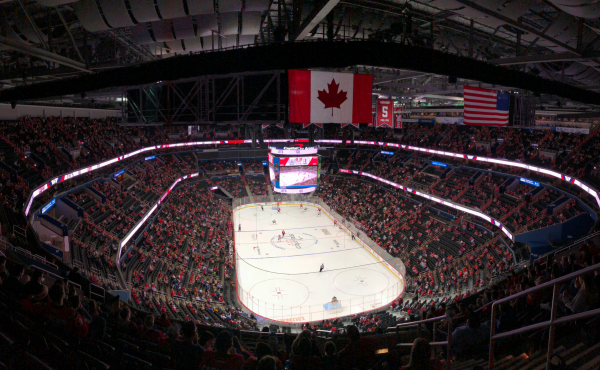
Earlier this month, I took a short sabbatical road trip with my six-year-old son— a journey that took us from our home in Michigan through Ontario and into Quebec, with stops in Toronto, Ottawa, and Montreal. Along the way, we immersed ourselves in one of our favorite pastimes: hockey. We caught NHL games in all three cities, visited the Hockey Hall of Fame, and sang along to Stompin’ Tom Connor’s The Hockey Song more times than I can count.
As someone who works closely with Episcopal faith communities on endowment oversight and stewardship, I’ve learned a lot about what it means to invest in something greater than yourself. Add to that my tenure as a devoted (and often heartbroken) Toronto Maple Leafs fan, and you’ve got a pretty clear picture of someone familiar with the long game. While this trip was a celebration of hockey, it also became a lens through which I saw something deeper: what it means to belong to a legacy—and why that matters for our churches, too.
Legacy Isn't Built Overnight
In Montreal, the atmosphere at the Bell Centre was electric, and not just because the Canadiens, the winningest franchise in NHL history, were playing against their longtime rival the Boston Bruins. It’s because every person in the building is part of something larger—something that’s been stewarded for generations. The same was true in Ottawa and especially in Toronto, where the crowd’s energy felt like a living inheritance passed down through time. There’s a kind of reverence in those spaces, a communal understanding that this team, this tradition, this shared identity—it matters. And it isn’t just about the scoreboard. It’s about history, belonging, and hope.
It reminded me that while hockey is a fast-paced game, legacy is slow work. Hockey teams build it year after year, through investment, tradition, and intentional planning. Churches, too, are the result of faithful investment—of people who planted trees under whose shade they would never sit. Endowments are a part of that long arc, a way for church members to contribute to a future they may never see, but one they deeply believe in.
Community Grows Through Shared Ownership
One of the most striking things about each arena was how personal it felt. Every jersey worn, every cheer, every ritual—these weren’t just spectators; they were stewards of a story. They came not just to be entertained, but to be part of something communal and enduring.
Churches are no different. When congregations are invited to invest—not just emotionally or spiritually, but tangibly—in the life and future of their church, it creates a stronger sense of ownership. Endowments aren’t just financial vehicles; they are statements of shared commitment, of people saying, “This place matters. This mission endures.”
Success Requires Long-Term Vision
There’s a reason hockey teams don’t build their future around a single star player. They develop prospects, invest in coaching, build balanced rosters, and think in seasons—not weeks. It’s not unlike the work churches do when they cultivate an endowment. A healthy endowment isn’t a quick fix; it’s a testament to long-term vision, to planting seeds that may not bear fruit for years, but that will sustain ministry for generations.
And that sense of shared investment—the idea that this is our team, our legacy—was unmistakable in every arena we visited. Fans showed up in jerseys not just for current players, but for legends whose names are stitched into the story of their franchise. It reminded me of the way church members talk about those who came before—the founding members, the beloved clergy, the quiet saints who shaped a parish’s identity through their time, talent, and treasure. In both spaces, the sense of ownership is real. The team doesn’t belong to management or players alone; it belongs to the people who fill the seats, who stick around, who pass it down.
Faithfulness in the Waiting
Let me be honest: being a Leafs fan hasn’t exactly been a cakewalk. We've had glimpses of greatness, painful letdowns, and seasons that tested even the most faithful fans. But the thing is—we keep showing up. Year after year. Not because we expect a Stanley Cup every season, but because we believe in the possibility of it.
That kind of loyalty—of showing up even when the rewards are delayed or uncertain—resonates deeply with what I see in the church. People who support their congregation not because everything is perfect, but because they believe in what the church is capable of. People who give to an endowment not because it yields instant results, but because it plants seeds for future growth and impact.
Just like I hold out hope that I’ll one day see the Leafs lift the Stanley Cup, I also believe in the long game of ministry. Endowments are an act of hope. A way of saying: this mission matters, and it will continue—through seasons of celebration and struggle.
Your Church Is a Team Worth Investing In
One of the best parts of this trip was watching my son fall in love with the game—seeing it not just as sport, but as story. And I realized that’s what we do in the church, too. We invite people into a bigger story. We pass down meaning. We root ourselves in something enduring.
If you’re a local leader wondering how to talk about the importance of your church’s endowment, maybe the conversation isn’t just about dollars and distributions. Maybe it’s about helping people see that their generosity is part of something lasting. That they’re not just giving to a fund—they’re joining a team. They’re investing in the future of a faith community they love, and the mission they believe in.
Because the truth is, legacy isn’t loud. It’s the quiet work of people who show up, season after season—who give, who believe, who build. And if my beloved Leafs can keep the dream alive after all these years, surely, we in the church can do the same.
-

Related Post
Honoring the Past, Investing in Tomorrow: The Case for Legacy Sunday Josh Anderson, Director, Endowment Management, writes about Legacy Sunday, which is a dedicated time… -

Related Post
Before the Gift Arrives: Preparing Your Church for an Endowment Gift Whether your church is receiving its first endowment gift or has had an endowment for years, having … -
Related Post
Eleanor Roosevelt and Us Through this story of Eleanor Roosevelt’s formation, we are invited to pay renewed attention to ou…
 RSS Feed

