December 4, 2025
Failing Upwards
When something doesn’t work out, what do you do? And how long does it take to try something else? How many times have you heard: ‘we tried that once before’? Ironically, it’s closely related to ‘…but we’ve always done it this way.’
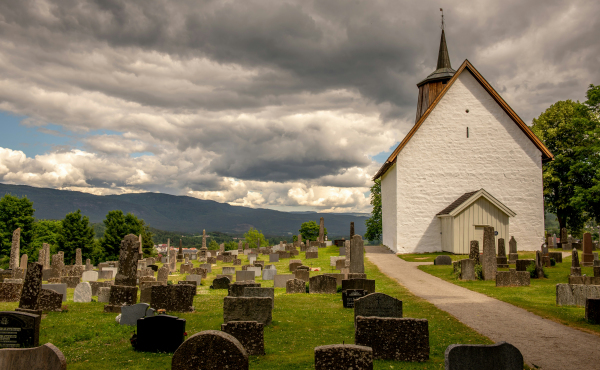
About seven years ago, a beloved, visionary member of St. George’s Episcopal Church in Valley Lee, Maryland died – much too early, and after she bravely fought an aggressive cancer. She was a friend to many, in part because she straddled so many worlds. She was a resident of Washington, DC and St. Mary’s County, Maryland; down here in St. Mary’s, she spent weekends and summers. Her funeral at the National Cathedral and burial in St. George’s churchyard were well-attended. But I walked away feeling such a gap, moving forward.
I wasn’t alone. Her friends and her community didn’t want there to be a gap. They wanted to continue her legacy of making connections and bringing joy, and especially around her love of music. All kinds of music, that is, and all those pieces that made her so special. A concert series was imagined, even though COVID-19 made us punt the first event from our planned launch in spring 2020 to that fall.
The concert series, called Music from Poplar Hill, brought world-class recording artists from DC, Baltimore, Richmond, even New York City to St. Mary’s County. The performances were in St. George’s Church, which forced the congregation to take on renovations we long discussed but didn’t have the impetus to do: make the altar area entirely flexible to host both worship and concerts and master classes, and install the audio and web technology to do so much more. Initially, there were two concerts per season, but we quickly grew to three. The music has been top-notch and each event is remarkably diverse: from Cuban jazz to Chinese dulcimer to classical ensembles to trumpet and piano.
Music from Poplar Hill wasn’t only about the concerts. Bringing world-class musicians to a place like Southern Maryland also brought the opportunity to connect working artists to local schools and school-aged kids, many of whom are budding musicians and, frankly, don’t necessarily know that a career in music and the arts is possible (until they meet and take a master class with a professional musician). Each event took up an entire weekend, both concerts and educational programming, and an increasingly large community of church members and community folks gathered to help pull off Music from Poplar Hill. It became a ‘thing’ in our wider community, and a buzz was started.
It also made the congregation of St. George’s Church and Resurrection Parish, our new multi-site parish, much more porous. People who wouldn’t, or didn’t, come to St. George’s for church came for the concerts, and got connected to a wider community who also called this place ‘home.’ They, too, started to make connections and get involved. Some got involved in the parish, but all who ventured closer to Music from Poplar Hill got more deeply involved in a large project: making meaning and building community and creating connections (to which Episcopalian Christians would gently point and say, as well: ‘that, too, is church.’)
Along the way, and largely through Music from Poplar Hill, we also started to deepen our relationships with members of two historically-black congregations, our immediate neighbors in Valley Lee. In my time as rector of St. George’s, we’ve shared mission projects with Bethesda UMC and St. Mark’s UAME, but the racialized history and legacy we’ve inherited always moved us quickly from sharing a project to going back home. I don’t know when exactly it happened in the last several years, but we started asking deeper questions of and about each other – this historically-white Episcopal church (with its 17th century legacy as a chapel of endowed wealth built upon Maryland’s tobacco economy and ownership of enslaved persons) and our historically-black neighbor congregations, who can trace both their legacy as Methodists and African Americans as a distinct and powerful reaction to the Anglican / Episcopal establishment. What’s your story, members of one church asked members from the other? Why do we exist as unique and distinct congregations, but just across the highway from each other? How could we build upon this new, neutral space of a community-building concert series to deepen the roots of our shared witness to the gospel in this place? Can we keep talking?
We’ve also known, at St. George’s, that there are unmarked graves in our churchyard of persons who were enslaved. At least that’s the local lore. We don’t know exactly where they are, but we’ve long talked about researching and identifying and, in time, memorializing those persons who are known only to God and, all the while, making a public acknowledgement and formal apology. So long as we’ve been talking about it within St. George’s, however, this conversation never really got going. Maybe because it was in the mix of all those other things we needed to talk about and accomplish. Maybe because the Lord was inviting us into a broader collaboration to make our words more than words.
Music from Poplar Hill, after six wonderful seasons of music-making, community-building and blessing our wider community, is coming to an end. The series director has moved back to New York to be closer to her adult children, and literally no one in our immediate circle could pull off what she has contributed. We wondered if there should be a future to the series, but the sense from the advisory group is that it’s accomplished so much – a new community doing new things. We will celebrate the gift of this series at Music from Poplar Hill’s final concert (and aligned educational programming) in early December.
What will continue is a surprising offshoot of Music from Poplar Hill! The unplanned conversation between St. George’s and Bethesda and St. Mark’s – one historically-white, two historically-black churches – has now become a new initiative with a new name. Shall We Gather is a growing community, comprising at least 40+ individuals from these three congregations, all of whom committed this past spring and summer to meet regularly, talk deeply, and explore our racialized histories and the legacies we carry with us. Hopes and expectations ran so high this past year that very generous financial contributions led us to hire a DC-based filmmaker to record our nascent attempts at engaging with each other and the ways our stories intersect. In coming months, a beautifully-made short documentary film will be released, which we’ll air at the local liberal arts college with a speaker forum. I hope that it, too, will plant seeds no one among us can imagine.
I am holding to a vision that, one day, I will walk the churchyard in Valley Lee, Maryland and it will be even more hallowed than it was before – for there will be a memorial acknowledging those human persons – bought and sold in bondage, and died in the same way – who are known only to God, and acknowledging this church’s complicity and seeking the Lord’s repentance. As I type these words, I don’t have a plan for that memorial, and I don’t know when that day will come. While we may yet be far from that day, with God’s grace, our larger community’s investment, and the church’s ability to fail well and fail upwards, I suspect we’re closer than we’ve ever been.
-
Related Post
Eleanor Roosevelt and Us Through this story of Eleanor Roosevelt’s formation, we are invited to pay renewed attention to ou… -

Related Tool
Approaching Change in a Congregation Every congregation and community of faith faces the need to change. This lesson workbook wil lintrod… -

Related Post
Embodying Our Prayers for the Poor The Rev. Lisa G. Fischbeck discusses prayers for the poor in our latest blog post.
 RSS Feed

