August 26, 2014
You've Been Challenged
Can you handle one more ALS ice-bucket challenge video? I promise. There’s a twist.
When my husband was challenged on Facebook, we talked about how to make it fun – and engage the whole congregation. This is what we came up with:
It was fun—and funny. Plus, it is, I think, a good example of being relevant and connected. Too often church isn’t a part of the world, but an insulated place of refuge and escape. Too often our priests are on pedestals, in the world but not of it. When we take ourselves too seriously, we often forget to take Jesus serious.
My husband’s cousin died a long, painful death from ALS. At the end, he couldn’t hold his head up, fill his lungs, walk, or talk. It is a dreadful disease, and I’m thankful that this silly ice-bucket challenge has taken on a deadly serious disease.
Raising money—and encouraging others to do so as well—is a faithful, Christian response to loving our neighbors. It’s not the only response, to be sure. But it certainly has its place among the ways we can help our brothers and sisters.
On a lighter note, engaging in the ice-bucket challenge offers an opportunity to connect. We often talk in the church about meeting people where they are. Well, like it or not, for the past few weeks, a lot of people were in folding chairs, getting coolers of ice water dumped on them.
When the Harry Potter movies were coming out, a friend of mine developed a VBS program. She used the familiar components from the movies to connect to the (maybe unfamiliar) themes of the gospel. I bet it’s hard for those kids to watch the scenes about herbology class and not think about the seeds God has planted in them as well.
Another example of connecting faith and culture is Lent Madness. This popular Lenten program puts its own spin on March Madness, pitting saints against each other in a March Madness-type bracket. Sure, it’s totally silly. But at the same time, thousands of people have learned about Frances Perkin’s commitment to economic justice, Charles Wesley’s gift of transforming prayers into song, and Saint Mary Magdalene’s witness to the risen Christ.
We have o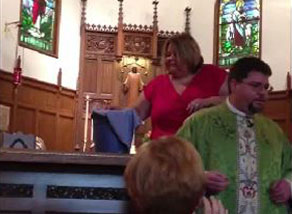 pportunities to be present in the world. Some of them are silly, some are deadly serious. I encourage folks to think creatively about ways of connecting the secular to the sacred. Not every scenario works (nor should it). For instance, I can’t think of a way to make grumpy cat videos work in a sermon. But I’m willing to listen to ideas.
-

Related Tool
Episcopal Migration Caucus The Episcopal Migration Caucus is a group of Episcopalians, lay and ordained, advocating for strong … -

Related Tool
Faith-Based Community Organizing: Book Study Groups This list includes resources to help your small group engage in meaningful conversations about congr… -
Related Post
Annual Meetings - A Time for Celebration and Exploration All congregations are required, by canons or by-laws, to have annual meetings to discuss the current…
 RSS Feed
-

Related Post
Walking Through Fear to Joy -

Related Tool
Approaching Change in a Congregation -

Related Post
Failing Upwards