"But speaking the truth in love, we must grow up in every way into him who is the head, into Christ..." (Ephesians 4:15)
This morning I attended the funeral of a former parishioner of mine at St. Francis Church in Holden [Massachusetts]. I'll call her Jane, because that was her name. Her obituary can be found here.
Jane was a hearty, independent New Englander through and through. She was the kind of saint that every healthy congregation needs and hopefully has. As my successor put it so well in his homily, Jane was "a truth-teller with a sincere and faithful heart." A lot of that truth was directed to the clergy - but always in love.
When I was a young new priest who thought I knew everything, Jane Howell helped me to grow up. She had a way of coming directly to me. You'd never hear it second hand from a parking lot conversation. She could be wrong, but more often she was right - or at least mostly right. She loved the Lord, her church, and the clergy - in that order. And she had lots of opinions about how I might do better to build up the Church and to serve the Lord. But as the preacher noted today, she loved God enough to speak the truth to him in love. (In fact I was very happy to hear she had not played favorites with me, but that in just a couple of years she had helped form him too! And I know of at least one other friend, now in the House of Bishops, who would say the same thing.)
When I was first ordained, I wasn't so sure that I liked the term "baby priest." In my case I was quite literally kind of a baby - heading to seminary right out of college. But even for later vocations, even for people who have had fancy careers and are then ordained in their forties or fifties, the truth is that priests are not fully formed after the bishop puts her or his hands on our head. It takes time and practice to truly form a priest: a good theological education, faithful mentors and colleagues and lots more. Someone said to me once that it takes at least ten years of prayer, and listening, and loving the people with whom we share ministry, and that seems about right.
Continue reading...
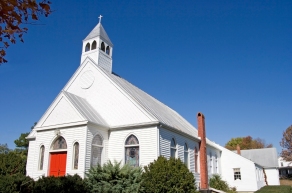
Motivational speaker Simon Sinek stresses that WHAT we do, and HOW we do it, are LESS important than a clear understanding of WHY we do things. Here are two key reasons ‘why’ we do a capital campaign:
1. A capital campaign is a vehicle for gratitude, service, and sharing
In church we can get caught up in the weeds of committee work and volunteering simply to get things done. There is often no time to ask the fundamental question: “Why is this work important?”
Continue reading...
I’ve finally figured it out. Jesus is a chaos muppet.
Bear with me. For those of you who are uptight about taking the Lord’s name in vain, I’m not really suggesting that Jesus is a muppet, not in any literal sort of sense. Though there is apparently a Muppet album of songs from “Jesus Christ, Superstar.”
If you haven’t read Dahlia Lithwick’s delightful treatise on Muppet Theory, you should. Here’s the basic idea: we can understand humanity by dividing everyone into two categories: order muppets and chaos muppets. If you are a Sesame Street fan, think of Bert and Ernie. Or even better, Bert and Cookie Monster. Bert craves order. Cookie Monster wreaks havoc. If you’re more of a Muppet Show fan, then of course Animal would be your prototypical chaos muppet.
Ever since my own family became acquainted with muppet theory, we have engaged in a lively, ongoing, all-ages debate about who is who in the family. When my spouse -- an order muppet if ever there was one -- is out of town, and I am struggling to get out the door in time to get my kids to school, I can hear the older one muttering, “Chaos muppet!” It’s all relative, of course. I generally do get the kids to school on time, but not with the sort of precision that my husband manages. There’s an element of uncertainty, a return trip for a forgotten phone, a detour in search of misplaced glasses or keys. No one really breathes deeply until we arrive at our destination. I’m not saying I’m not a chaos muppet, just that there are muppets far more chaotic than I.
Jesus, for example. I may lose my keys, but Jesus turns things upside down. He requires things of us that go against our better judgment, especially when it comes to our more annoying neighbors. He makes the scribes and Pharisees (order muppets!) very nervous by refusing to be predictable and delighting in undermining the rules. In his finest hour, he commits what I once heard the late, great Robert McAfee Brown describe as “the ultimate act of civil disobedience.” The Romans execute him, and he refuses to stay dead. A total chaos muppet. Just ask Pilate. Or Herod. Jesus comes on the scene, and despite everyone’s best efforts to contain him, chaos ensues.
Continue reading...
When a two-year-old is antsy and curious, parents squirm. Especially when it’s the day of the younger brother’s baptism and the entire family is in the pews, the church is full, and you have imagined this moment as perfect. Mom’s arms are full with a newborn, and Dad is wrangling two other preschoolers.
As parents, most of us have been there. We try to summon superpowers so that the glare from our eyes will magically curtail the exploration. We marvel at the superpowers of our children who can suddenly make their bodies completely limp and boneless when we try to pull them off the floor, out from under the pews, and in from the aisles. We wither a bit inside as our children choose this day, this moment, to explore, to fuss, to wander.
But here’s the thing: They’re kids. And this is their church too.
I’ve been to churches and with parishioners who still espouse the philosophy of children as seen but not heard. I remember the chiding from a fellow congregant when my children were little. I was feeding my 10-week-old, and our three-year-old wiggled out of the seat and to her father, who was preaching. He scooped her up and continued. After the service, the parishioner told me I needed to control my child and heaped on other digs about my poor parenting. My hurt and indignation burn a decade later.
Continue reading...
It’s not that we don’t want to be spiritual. We’re lay people serving on vestries that oversee the business of the church. We lend our experience from the workplace and serving on not-for-profit boards to our parish decision-making. These are our gifts and we use them as we have been trained. And besides, we are spiritual… we open our meetings with prayer.
Ah, but what if you covered your meetings with prayer? What if you held up to God your questions about priorities and direction and called on the Holy Spirit to guide your decisions?
Several congregations are utilizing a prayer model that is transforming meetings from secular, office-style business to spiritual, prayerful-style obedience. Authors Catherin C. Tran and Sandra Hughes Boyd explain how to engage leadership in prayerful discernment in their book, Spiritual Discovery: A Method for Discernment in Small Groups and Congregations. Their method is grounded in the Prayer Model developed by Jane E. Vennard, a nationally known spiritual director whose model invites a “compassionate observer” to silently listen and pray while a seeker speaks with his/her spiritual director.
With a group, there may be three or four “compassionate observers” sitting in a circle surrounding a smaller circle made up of the person seeking direction, and the people who are “responders.” Spiritual Discovery gives clear how-to steps for setting up a group prayer model session, and how it should be facilitated. Those in the center circle speak, but between opportunity for words are minutes of silent prayer. One of the observers is a timekeeper – the person with the responsibility to insure the process moves in rhythm with the prescribed format.
The authors also offer ideas for teaching people how to incorporate Spiritual Discovery Method for group decision making. But they also make it clear that the best way to understand the model is to simply experience it:
Continue reading...
Every Sunday at St. Mary’s, at all our services that include music, we sing the same song. I hear that the associate rector even makes the 7:30am service sing it on occasion, and they never sing. We picked it up in Hawaii a few years ago, at a meeting of the Japanese Convocation of Episcopal Asiamerican Ministries -- in church lingo, EAM JCon.
We sing the song as part of the blessing at the end of the service. It goes like this:
Ki-ri-su-to no he-i-wa ga
Wa-ta-shi-ta-chi no ko-ko-ro no
Su-mi-zu-mi-i-ni ma-a-de
Yu-ki-wa-ta-ri-ma-su yo u-ni
May the peace of Christ be with you.
May the love of God dwell deep in your heart.
May the Spirit enlighten your way.
May you walk in the comfort of God’s care.
La paz de Cristo sea contigo
Y el amor de Dios en tu corazón
Que el Espíritu te ilumine
Que camines cuidado por tu Dios
It starts in Japanese, the language of St. Mary’s founders. The second verse, as you probably guessed, is in English, the language of our current lifelong members. The third verse is in Spanish, our own translation into one of the languages of many of our newest members. When we gathered with our Korean neighbor congregations for an event highlighting reconciliation efforts between Anglicans in Japan and Korea, we added a verse in Korean. Efforts are currently underway to produce a verse in Zapotec, another language spoken by many of our newer members.
Continue reading..
Conflict may take several forms. Many times it has to do with an imbalance of power or a sense that everyone is not being treated fairly. It may be visible to all or more subtly, be building bit by bit despite the best efforts of those determined to avoid conflict at all costs.
Our articles this month offer approaches for congregational leaders to consider when faced with conflict.
Continue reading...
I recently came across an intriguing statement from the twentieth-century Swiss theologian Karl Barth: “I don’t believe in the empty tomb,” Barth is rumored to have said; “I believe in the risen Lord.” According to those who know Barth’s work well, “he is known for down-playing the empty tomb, both in print and in verbal answers to questions” – this according to my new favorite Facebook page, Karl Barth for Dummies. This is the case, according to Barth, because the resurrection isn’t strictly an historical event; it’s a theological, indeed an eschatological (that is, end of time) truth.
I’ve never really understood Barth, although I’ve long been drawn to his manner of thinking. For him, if I can put it in a decent nutshell, God isn’t something we can imagine or readily engage; nor is God’s will something we can reasonably discern. God is Other. And we are, from time to time, utterly foolish when we try to draw the Other closer, to make it more like the ‘ground of our being.’
As I said, I don’t fully get it, but what I do understand is that there is a passion, a drive, and a conviction behind and within him. There’s something other-worldly which undoubtedly inspired Barth, and it seems he kept pursuing that truth throughout the whole of his life – as a teacher, as a pastor; above all, as a follower of Jesus. Even though Barth scholars will always have much more to say than what I just described, I find the most interesting thing about his thinking is where it comes from in his life. Whatever led this man to write, literally, volumes upon volumes of dense theology was the power of one lasting inspiration, the power of one idea.
And one great inspiration can, it seems, change the world.
Continue reading...
For a few years in college I was a part of a small chapter of a national fundamentalist group called Campus Crusade for Christ. The other members were very kind and sincere, but they didn’t really know how to handle questions that lacked easy or pre-determined answers. It didn’t take long for me to realize this was not the right group for me.
Since then, I’ve occasionally (though not often) worked and volunteered in places where everyone had to agree. Questions were not welcome. It was stifling.
As we’re reminded in yesterday’s Gospel reading, a healthy community has room for doubt and questions. After all, not even Thomas was outcast because of his questions.
Fast forwarding a couple of millennia, recent research done in the Google offices indicates that one of the things that makes a team effective is psychological safety. This means you can throw out ideas without ridicule and be honest about what you think and who you are. It means you don’t have to pretend to be someone else, someone without any problems or questions.
Continue reading...
“I’m not sure we can do this…”
Often when I first visit a parish in my capacity as a capital campaign consultant I find that folks are hesitant about fully embracing a capital campaign. There is usually some fear about impact on their annual stewardship efforts (“Will we be able to maintain current giving levels?” “We’d hoped to increase annual giving this year.”), finding enough volunteers, (“People are so busy…), and, most of all, being able to raise enough money (What if we can’t meet our goal?). While some might find these concerns daunting, I find them comforting because these fears are normal. This is why I love what I do and why I believe fundraising is an important part of the ministry of the Church.
While I may be biased, I do believe when the time and energy is put into the discernment and feasibility study phases of a campaign, your community will arrive at the solicitation phase with a sense of contagious excitement.
I saw this contagious excitement most recently with a parish that adjusted their goal coming out of the feasibility phase. They were raising money to build a new parish hall, repurpose their existing parish hall, and create a maintenance fund. They entered into the congregational gifts phase having already met their initial goal and were well on the way to their challenge goal! By the end of their campaign, both goals were met and they had raised an additional $17,000 to seed their maintenance fund. Not only were they able to complete their new parish hall, but they could do far more then they imagined.
Continue reading...
Sunday School is a tough challenge for smaller churches. There are Sundays with no kids in church. There are Sundays with one baby, two toddlers, an 8-year old, and a middle schooler. Neither scenario lends itself to an easy classroom scenario, even if we had a consistent pool of volunteers, and someone to organize curriculum, prepare materials, etc. Those are issues too…
To further complicate things at St. Mary’s, we are a congregation that has been mostly English speaking for the last fifty-plus years, and now most of the kids come to the Spanish service. So even when the English-speaking parents who grew up with traditional Sunday School get together to try to revive Sunday School, there are issues of timing, and varying cultural expectations about what to do with kids in church.
What we have come up with is not perfect. But it’s quite a bit better than nothing. We created a kids’ corner. It’s at the back of the church, using a cozy-ish space that was previously used to store folding chairs. It’s immediately visible when you walk into church. We added a rug, a rocking chair, a small table with colorful little-people-sized chairs, bookshelves with donated books, an old wooden giraffe from a long-ago carnival set-up, a kid-sized altar that the Sunday School used to use, some colorful biblical art, and lots of paper and crayons.
Here’s what’s great about it:
Continue reading...
I grew up in a faith tradition where Lent was something to be picked off a shirt. Maybe we talked about the season but it was never emphasized.
I didn’t realize how fully I’ve come to embrace the seasons of the church year until a phone call with a friend. She went to a megachurch for Easter service. On Good Friday.
The church has so many people, my friend explained, that they held the same Easter service throughout the weekend, on Good Friday, Holy Saturday, and Easter Day.
Bewildered, I asked a few questions. Apparently, they conflated the Triduum and Easter into one service. Oh, they mentioned the crucifixion, my friend said.
When I hung up the phone, I came to an important realization: I have become fully Anglicized. I embrace the seasons of the church as a way to move through the grand narrative of God’s story. As much as I want to run to Easter joy, I must walk through Holy Week despair.
The Maundy Thursday service moved me to tears. I almost broke into ugly cry as a I watched the priest wash the feet of a 90-year-old woman. The intimacy and trust in the act was palpable. The physical act of stripping the altar was wrenching. The naked cross on a bare altar tore me apart.
Moving through these days transforms the words: “Christ has died. Christ is risen. Christ will come again.”
Continue reading...
Alleluia! It feels good to say THAT again! Glorious celebrations of Jesus’ resurrection are still ringing in our ears as Eastertide joyously overtakes the liturgical calendar following Lent.
The observation of a “Holy Lent” often involves personal reflection, considering how we are moving toward a deeper relationship with Jesus Christ, and what barriers may be getting in the way. We may also consider how we follow Jesus as apostles sent to do His work.
If you enjoyed a Lenten discipline in which you did some intentional listening for God’s will or desire in your life, consider continuing that discernment. “Wait,” you might say, “’Discernment’ is for those who feel called to be a priest or deacon. That’s not me!”
In his book, Ears to Hear: Recognizing and Responding to God’s Call, Edward S. Little, bishop of the Diocese of Northern Indiana, opens with a declaration worthy of our consideration: “God’s people are a called people, and there are no exceptions.” (Page 1)
Bishop Little uses examples from the Bible to demonstrate how and when God called people to leadership, to ministry, to special purposes. Examples include Abraham’s call to uproot his family to go to a new land, Moses called to lead God’s people out of bondage, and Deborah called by her community to save Israel.
Those are the well knowns. Bishop Little also raises up the lesser knowns, such as Bezalel and Oholiab, chosen by God (in Exodus) to build a tabernacle:
Continue reading...
A few times a month for most of the last eight years, I have led a Bible Study at Century Regional Detention Facility, Los Angeles County’s main jail for women. It’s an environment where just about nobody knows what an Episcopalian is. I pass through nine locked doors and a security checkpoint, arrive in my assigned unit, and gather whoever is in the mood for Bible Study (or an hour out of her cell…). Fifteen to forty women sit in a noisy circle and wait for me to start. I have to explain Episcopalians, every time, completely from scratch.
Here’s my spiel. I vary it a little each time, but the basic points seem to work pretty well:
The Episcopal Church is a Christian Church. We believe in God and in Jesus and in the Bible. If you’re familiar with Catholic Church, our worship services look pretty similar. If you’re more familiar with Protestant churches, you will easily recognize the way we place a lot of emphasis on the Bible as the living Word of God, and draw on scripture to try to understand how we should shape and change our lives so that everything we do points towards God.
Here are some things that set us apart from a lot of churches you may have experienced. We really try hard to be a church that has room for everyone. That means that our leaders and our members are men and women, people who are married and not married, have kids and don’t have kids, people who are gay and straight, people of different races and different languages and cultures, people with different kinds of mental and physical abilities. When you hear us criticized, it’s usually because someone thinks we have the doors open a little too wide. But we truly believe that God love us all and has placed gifts in all of us, and that the church is the richest when it can receive all those gifts and make space for people to use them.
We’re not a church with a lot of rules. That makes some people suspicious. But God really just gave us two jobs to do, love God and love each other. God could have said, “Judge one another, as I will judge you,” but judging isn’t actually in our job description. God kept that one for Godself. So we try to let God be God and get about the business of doing our job: love.
Continue reading...
Every year, her words come back to me around this time of year. I think it was during Holy Week, or maybe a week or two before, when the pastor of the congregation where I served as seminarian said, “I honestly don’t know what else to preach on Easter! What should I add?” she wondered. “Maybe I should just get in the pulpit, take a deep breath, look around with a smile and say, one more time, ‘Alleluia! Christ is risen!’ And sit down.”
I remember that her words sounded odd to me at the time. It was probably an off-handed statement, maybe the exasperation of not coming up with anything to say. But seminarians read a lot and think a lot and write a lot, and at that point in my life I was convinced that there was always something more I needed to add to any given theological point or doctrine. Such are the nature of late-night conversations and arguments in seminary.
Now, however, I’m not so sure.
Now, however, I understand what she was really saying; what she really meant. What else can we bring to this story? What other meaning can we draw out? Looking at the pure drama and rhythm of Holy Week, itself, the movement through these stories to Easter Day, what else can we, should we add?
It’s around this time that I turn to poetry much more than prose. Like many others, I have my own ‘canon’ of preferred poets, religious and otherwise; Mary Oliver and George Herbert in my top slots. And those who’ve attended Holy Week and Easter worship at St. George’s, Valley Lee are probably getting used to these names, and I’d like to think they’re growing a bit more accustomed to Holy Week meditations, and poetry readings, and musing homilies that don’t really have a point, a “Now you should do/consider/pray about such-and-such…”
Continue reading...
Steve Jobs and Apple have much to teach the church: both things we should embrace and tenets we should push away.
As I nursed a hacking cough this weekend, I finally caught the movie, Steve Jobs. Like many, I have long been a fan of Apple’s commitment to innovation and to the user-experience. This is a place where the tech company has much to offer the church. As we face significant changes in how people communicate and connect, we have the opportunity and challenge to develop new ways of being church, from how and when we worship to the types of relationships we seek and develop. Much has been made about improving the user-experience. This includes tweaks like offering an easy-to-follow worship bulletin to adding clear signage throughout a facility.
But as much as I like my iPad, iPhone, and big iMac, I took away a more important lesson from the movie. Steve Jobs was a closed-source fanatic. By that, I mean he didn’t want his products to interact with others already on the market. He was so committed to this principle that the MacIntosh computer required a special tool to open. A regular Phillips head screwdriver wouldn’t do.
Our churches need to be—must be—are called to be open source. In computer ease, open source means that the “software with its source code [is] made available with a license in which the copyright holder provides the rights to study, change, and distribute the software to anyone and for any purpose. Open-source software may be developed in a collaborative public manner” (
so says Wikipedia). In English, this means that open source is accessible to everyone and open to improvements or changes by users.
The church has for too long operated on a closed-source model. A few years ago, I offered free advertising and marketing materials to Episcopal communicators. The first feedback I received was shocking: “So what’s the catch?” Honestly, there was no catch. We had developed advertising materials that I thought could be helpful to the wider church, so I offered it to folks. The cynicism of the response reflects a broader issue: We haven’t created an environment where sharing is the norm, so when someone does it, we’re taken aback and become suspicious.
Continue reading...
Holy Week, the seven days preceding Easter, commemorates the suffering and death of Jesus, as recounted in Christian Scripture. Like all Anglican churches, Trinity Church Wall Street offers a variety of services that have long history and tradition.
In this series of videos, members of Trinity’s liturgical staff present descriptions of the significant days of Holy Week, the liturgies connected with them, and the reasons why they can be so personally meaningful.
Palm Sunday
Tenebrae
Maundy Thursday
Good Friday
Great Vigil
Like all the videos Trinity produces, these are intended to be a resource for other communities. Please use and share them however you would like. We hope you find them inspiring and useful.
Thank you to Trinity Wall Street for giving ECF Vital Practices permission to share these videos.
Don't miss a blog post! Subscribe via email or RSS, using the grey box on the upper right.
There has been an uptick of inquiries in my inbox as well as voice mail, all essentially about the same question: “Can you help us figure out what to do with our (fill in the blank: children, youth, adult, formation, education, Church School) ministries program?” The difficulty in responding is that I don’t have an answer. Nothing that is a quick fix. Nothing that hiring a children’s minister, youth director, or Director of Christian Formation can solve (at least not on their own). It can only be addressed through community discernment – lay and clergy leaders with parents especially – working together.
Here’s an example of some of the statements raised, after the initial question:
Children aren’t coming to Church School.
Parents are disengaged with talking about faith at home and don’t support their attendance in class (or worship).
Our teachers don’t like the curriculum we are using (
read between the lines . . . What curriculum can you recommend that volunteers like that is easy?)
Youth are bored.
We keep reading about putting things online – but who has the time to figure that out?
Anyone who has been involved in Christian formation for the past ten years has been predicting that the future (the present, really) is not the same as it has been in the past. Recent statistics seem to say that an “active” church-goer attends once a month. Experiential learning is best; our children are a “wired” generation; all of us are stretched to the limit (time, money, emotionally and physically).
We are living in a post-Christian society. Yes, people may claim to be members of a church or call themselves a Christian, but living that out by attending Sunday worship (or class) is not part of that picture. There may be many reasons for that – all reasonable: working on Sunday, school or sports activities, custodial parenting, caring for elders, and just plain tired and needing a chance to “sleep in.”
So what’s a church to do?
Continue reading...
In the March Vital Practices Digest, we offer 5 treasurer basics every parish leader involved with finances might use, with the 5th a resource to help develop year-round stewardship in your congregation.
It’s easy and free to connect with more great resources for your congregation. Subscribe to ECF Vital Practices to receive Vestry Papers and this Vital Practices Digest in your inbox each month.
Continue reading...
“No comment” is not the answer to poor planning.
In a decade as a diocesan communicator, I was the point person on several occasions when something went wrong and the media wanted information. I also spent eight years as the one asking the questions as a journalist, including covering the abuse scandal in the Roman Catholic Church.
So here’s the thing: No comment means you’re either hiding something or you’re not prepared. Regardless, in situations that are ugly, with possible victims or misconduct, no comment isn’t the answer.
I’m not advocating for throwing open the doors and divulging every scrap of information. Often in cases of alleged misconduct, there are privacy concerns, for both the victim and the accused. But as leaders and representatives of the Church/church, we have an obligation to be honest and as forthcoming as possible.
What does that mean? Well, first, communication planning must be a part of the process, not an afterthought. If a leader in your congregation (clergy or lay) is accused of misconduct (including financial or sexual, criminal activity, or drug/alcohol addictions), the other leaders (vestry, diocesan, etc.) should immediately pull in a communications expert. This person can advise on how to clearly communicate to the stakeholders in a way that honors the individuals directly involved in the problem as well as those who will be affected by it. In addition, if the issue is something that will garner media attention, the communication expert can help craft an honest, succinct release.
Continue reading...
 RSS Feed