June 19, 2025
Leaning In and Reaching Out
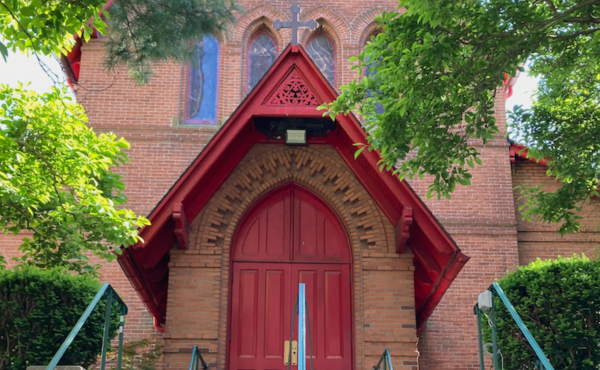
What does congregational solidarity look like? Trinity Church of Morrisania's story is not one of traditional congregational growth or increasing Sunday attendance. Trinity’s story is of ministry rooted in relationships, mutual care, and radical welcome.
Jacob
I remember shifting anxiously in my metal folding chair. I was seated around twenty or so others in a circle at the foot of the chancel of the dimly lit sanctuary. No one wants to be here, I thought. I keep stumbling on my Spanish. The bilingual bulletin was written badly and everyone is getting lost throughout the service. Everything is going wrong.
I had just delivered a brief reflection to a community gathering at Trinity Church of Morrisania in the South Bronx. The reflection was on Matthew 18 (“Truly I tell you, unless you change and become like children, you will never enter the kingdom of heaven”), which was read during a bilingual compline service – a service that, until this point, I thought I had failed in organizing. I opened the floor to a discussion. After a few moments of silence, a community member spoke up. She came from one of the families who had recently migrated from Ecuador.
“Children are naturally giving and don’t hold grudges like we adults often do,” she began. “God wants us to love and be kind to one another, regardless of our race or what languages we speak. We should love and support one another.” Several other hands went up and other members of the community volunteered to chime in with their additions and reflections, turning this prayer service into a lively forum on what it means to “become like children”.
I realized then, what I hope to convey through this statement, that this story actually isn’t about me; it’s about sacred community, resurrection, and the possibilities that emerge when we see the Holy Spirit at work, and we lean in. I witnessed this at Trinity, a struggling parish facing declining membership, a tight budget, and extensive repairs. But when a new migrant family in the neighborhood came asking for a meal, instead of just turning the family away with prayers and some cash, Trinity launched Gathering Around the Table, a monthly meal that joined the Trinity community and its migrant neighbors. A story of resurrection begins.
Paula
In 2020, Trinity Episcopal Church of Morrisania launched a new ministry in its neighborhood of the Bronx, our nation’s poorest congressional district. Our small group of volunteers saw something urgent and sacred: a growing community of Latinx migrants and other undocumented individuals, who were navigating hardship with courage, but often without a sense of connection or support. Our congregation, which had seen steady decline due to aging, illness, and the COVID-19 pandemic, opened its doors to provide food, clothing, and part-time work opportunities through our thrift shop geared toward our new neighbors, primarily from Latin America and Africa. We advocated to get undocumented children into the school system and ensured that their families received the services to which they were entitled. Trinity focused on providing English literacy to the children and parents while honoring their heritages. All the while, we were building trust.
As our community mobilized to empower our neighbors to meet their basic needs, Trinity reframed its ministry around building community with the neighborhood, and “Gathering Around the Table” was born. Once a month, community members were invited to a communal dinner in our parish hall. Participants talked about their lives and shared what their faith meant to them, especially during this time of transition and uncertainty. We read scripture, sang hymns, and prayed together around meals. The goal was to provide a safe place for our new neighbors to make connections with other community members and with the church.
Jacob
I was called by Senior Warden, Paula Roberts, to enter the community in January 2023. At this point, Gathering Around the Table had evolved into a shared bilingual compline liturgy and a meal. I was asked to create the monthly liturgy and help teach a “Sunday School” curriculum for the children that would precede the prayer service and meal. I felt called to volunteer, inspired by my family's journey as first-generation immigrants seeking a better life. This ministry’s focus on building community with our migrant neighbors, rather than just 'serving' them, deeply resonated with me. Through my work, I’ve seen children grow in faith, families find belonging, and communities come together in mutual support and love.
The first lesson we led was on David and Goliath, emphasizing that God helps us face big challenges. I prepared a PowerPoint with Scripture and fun reenactments, ending with a game and prizes. As liturgist for the nightly prayer service, I had the opportunity to shape our readings and reflections on major themes throughout the liturgical calendar. For example, during our March gathering, we incorporated Stations of the Cross reflections as we processed throughout the Trinity sanctuary. In April, we observed Earth Day and held our prayer service in the church’s garden, where the children of the community had cleared weeds and planted several vegetables. In the spirit of caring for God’s creation, the children took ownership of stewarding the garden beyond that gathering. Months later, it would yield its first vegetables!
Paula
From the beginning, we knew we weren’t building the church most people expected. We were building a church without rigid structures but full of sacred encounters. A church shaped by kitchens and sidewalks, conversations in living rooms, and prayers whispered on street corners. One that asked, “What does it mean to be neighbors?”
Jacob
On Christmas Eve 2023, Trinity Church of Morrisania held its final Eucharist. A month earlier, we gathered around the table one last time, with the children hanging papel picado flags in a late commemoration of Dia de los Muertos. Our liturgy was based on Luke 17: 11-16, where Jesus heals ten people, but only one turns back to thank Jesus. Together, we were challenged to look at the closing of Trinity through a framing of gratitude. Gathering Around the Table gave us glimpses of sacred community rooted in the Spirit of Love—a Spirit that lives within us and continues to drive us to seek justice and peace in our lives. For this, we were deeply grateful.
Paula
While Trinity closed its doors in 2023, the community we had nurtured did not disappear. The spirit of that ministry, its heart, continues. Today, a core group of undocumented migrants and others in the neighborhood remain deeply connected with one another. They call us regularly and visit each other's homes. These are not transactional visits—they are visits of friendship, faith, and shared struggle.
And in this current moment, when ICE activity is increasing and anti-immigrant sentiment is rising across the country, many undocumented people are more afraid than ever. They fear for their families, their jobs, and their futures. But they continue to reach out, not for charity but solidarity. They look to me and each other for advice, encouragement, and presence. That trust is sacred. It is the church in action.
Jacob
The closing of Gathering Around the Table was a profound loss to me and many. But as stated, this story isn’t about me. It’s about resurrection, which is rarely on our terms. We may not know how or when the Holy Spirit will bring new life. Our job is only to lean in when we see Her at work. I believe the church’s work is to protect and serve the marginalized. As hatred toward the migrant community rises, it is our duty as Christ-followers to welcome the stranger and build local networks of support and protection for our new neighbors. With God’s help, we will lean in.
-

Related Post
The Art of Organizing, Part Two: Building Capacity for Sacred Resistance In The Art of Organizing, written during the early stages of the emerging COVID pandemic, Rev. Dr. G… -
Related Post
Holy Hospitality The need for supportive care and housing of every kind is expanding. Churches can help. The faithful… -

Related Tool
Why is Creation Care So Important? The Rev. Bradley Mattson explores Jesus' teachings about fulfilling God's law, emphasizing that crea…
 RSS Feed
-

Related Post
Eleanor Roosevelt and Us -

Related Tool
Building Your Asset Map: Building Authentic Relationships -

Related Post
Thriving Through Collaboration