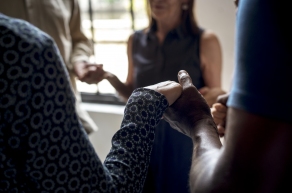
I remember my grandmother talking about going to prayer meetings. Some faith traditions still hold them, and maybe some Episcopal congregations do too. It’s a wonderful concept, coming together to pray in community, possibly over something specific.
A recent Forward Day By Day meditation by The Rev’d Scott Gunn, Forward Movement Executive Director, offered a good reminder that any Vestry or other church meeting can turn to prayer when the way forward seems unclear. He realizes this might seem a bit odd as leaders take seriously their responsibility to find solutions:
“Indeed, we should do our due diligence to ensure we make wise decisions. It’s also true that we need to listen for God’s call to us, whether we are deciding things for ourselves or for our church.”
Continue reading...
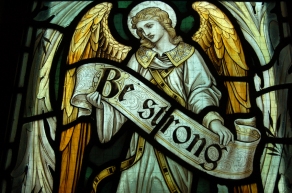
I find a lot of hope about the changing Church and its role in the changing world in those coming from outside our tradition. What do these folks have to say to us? Lots, it turns out. Can we hear it and respond in ways-appropriate-to-our-context? That's the big question, and much of what I have dedicated my life and ministry to. I issue this warning as when I work with parishes, vestries, bishops, seminarians, or whatever group of Episcopalians will have me, and then I share with them the seemingly bleak news that we must change or go home, believe it or not, they don't always thank me for being such a harbinger. That said, if you can keep an open mind, heart, and, well, ears, I think there is a lot of value, hope, and inspiration for where we are and where we are headed.
Continue reading...
A key ingredient for a healthy, vibrant congregation is a strong appreciation for the ministry of the laity as well as the ministry of the clergy. Shared collaborative leadership is critical for the spiritual growth of our congregations. However increasingly, there in an imbalance in our optimal leadership paradigm.
Many congregations are faced with the issue of no permanent clergy leadership and are continuously being served by supply clergy or have no clergy. This situation strains the effectiveness of the lay leadership and worsens the vitality issues of these congregations.
For many search committees, having the opportunity to discern the right clergy is increasingly difficult when there are fewer options. This may lead to a mismatch of expectations and inevitable conflict.
Continue reading...

Do you want to have meaningful conversations about spirituality, especially with non-members? If so, I encourage you to consider three principles.
First, avoid jargon. I define ‘jargon’ as any word you have not used outside of church activities during the last week. Certainly ‘exegesis’ applies, as do ‘salvation theory’, ‘eschatology’ and ‘incarnation’. But have you considered ‘narthex’ and ‘Eucharist’? My suggestion is if you find the need to use such words, explain them at the same time. In writing we would say ‘narthex’ (lobby).
I know! We went to school for a long time and want to make sure people know that. When I lead spiritual gifts identification workshops I say the real gift of tongues is shown by an accountant who can explain a balance sheet! Maybe there is a similar statement for clergy.
Continue reading...
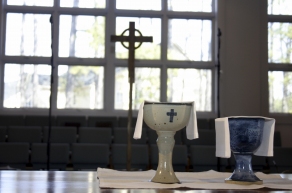
In my book, Behold What You Are: Becoming the Body of Christ, I suggest defining liturgy as “the work of the people and a public work, expressing and forming of the Body of Christ, given for the world.” As such, whenever we find ourselves planning or preparing for a liturgy, we might ask:
How is this liturgy engaging the people?
How is this liturgy public?
How will this liturgy express who we are as the Body of Christ?
How will it form us as the Body of Christ, given for the world?
We can apply these questions to everything from how we welcome to how we sing, from how we collect the offerings to how we send people forth.
Continue reading...

The invitation was simple: “No agenda, just conversation. No pressure, just invitation.”
With these words, the rector and newcomers coordinator at Church of the Holy Communion in Memphis invited the members of St. Elisabeth’s Episcopal Church in nearby Bartlett, Tennessee to a service of Evening Prayer followed by a time of conversation. St. Elisabeth’s was about to close, and Holy Communion was not sure how best to help.
There is plenty of literature about how two congregations can start journeying together, but our story is not grounded in any particular theory. We just listened to each other, and we built a model that worked for us. Other churches in other places could easily do the same.
Continue reading...

At long last, the two congregations I serve as rector are now one church – one church, we say, in two locations. Church of the Ascension in Lexington Park, MD and St. George’s Church in Valley Lee, MD are now two churches, two campuses of Resurrection Parish: the Episcopal Diocese of Washington’s newest parish, indeed the newest parish in our entire Episcopal Church! It’s been a long time coming, not to mention an incredible process; I’ve blogged extensively about our discernment around this initiative on ECF Vital Practices.
To be very technical, we merged two parishes into one parish. That may not seem super groundbreaking unto itself, but let me provide some context. St. George’s in Valley Lee is Maryland’s oldest continuous Anglican / Episcopal worshipping community – dating back to 1638 – and it became the parish church of William & Mary Parish when, in 1692, the colony was subdivided into 30 Church of England parishes (so much for Maryland’s heritage of religious toleration; we, too, got an established church not long after our founding). Church of the Ascension, meanwhile, was planted in a brand-new, post-WWII suburb as a mission chapel in the 1950s – along with so many other Episcopal church buildings and institutions in American cultural life – and it became its own full-fledged parish (Patuxent Parish) in 1968. Thanks, Baby Boom!
Continue reading...

Over the past 500 years, the perception has been that the old world had all the answers: the science, technology, and advanced ways of living. Can that still be said? Or perceived as truth?
We are facing a monumental moral crisis. Consider these observations:
• The United States is deeply divided politically
• Income inequality is at an all-time high; poverty and homelessness are on the rise
• Pollution of the air, water, and land is contributing to climate change
• Rainforests are being destroyed each day, contributing to global warming, and thousands of native people in South America are being killed for trying to protect the earth
• More and more animal species are becoming extinct
• Violence is glorified on TV—guns are becoming a national pastime—some sports have become barbaric (UFC, WWA)—while mental health is in decline
Continue reading...
ECF President Donald Romanik is currently in Abilene, TX celebrating Holy week and Easter with his family. In this video, he shares Easter greetings in conversation with his son Rev. David Romanik, Rector at Church of the Heavenly Rest in Abilene, Texas. Blessings for Holy week and a hopeful Easter to all of you, from everyone at ECF.
Continue reading...
You won’t find it in the Guinness Book, but we’re setting a world record that hopefully won’t be repeated. Normally the season of Lent lasts for forty days, after which we celebrate the resurrection of Jesus on Easter. But what I see is that Lent began on February 26, 2020 and never finished. We’ve been locked down in the pandemic for a whole year, and it hasn’t let up yet.
The Book of Common Prayer tells us that for more than a thousand years “it’s been the custom of the church to prepare for Good Friday and Easter by a season of penitence and fasting.” (p. 264) Lent is a time for stepping back to take a look at our lives, often giving up a comfortable habit for a while to see how that feels. In doing that, we’re following Jesus on his forty-day vision quest in the desert, when he was tempted by Satan and waited on by angels. Then after the darkness and agony of the crucifixion the glorious resurrection comes, as reliably as the sun rising in the east.
Continue reading...
Picking up some scattered debris around the churchyard, I paused at Kitty’s grave. It had warmed a bit, welcome after too much ice and cold, so I stayed there a while. I remember her fondly, and miss her, too. I said a prayer then carried on with yard cleanup, an unexpected chore that morning, nice to be outdoors. Nearby Kitty’s grave is Betty’s, and on the other side of the belltower is where JoAnn lies in rest. I said a prayer for them as well, and called to mind the picture of their faces, the sounds of their voices. I remembered how truly alive they were, all of them dear, funny, strong, faithful Christian women. They were widowed for some time, all of them. None, I thank God, knew the devastating impact of this past year: pandemic, shutdown, fear and anxiety.
Continue reading...

Laughter, games, art activities, punch in little dixie cups, and cookies with cream fillings are what I remember most about Vacation Bible School (VBS) on the Navajo Nation. Churches came in droves to visit and minister to the children and families. It was the place to be for Elementary and Middle School kids. We loved to see all the smiling and welcoming faces of new people from the big cities willing to play with us and read, sometimes ready to teach some kids how to play the piano or the ukulele. The partners all loved to sing bible songs - so loud it seemed the windows would burst.
I was a baptized Episcopalian but VBS and Holidays were mostly the only times I went to church as a child. My parents and most of my relatives in my community follow the ways of Navajo teachings, ceremonies, and prayer. My mother was devout about prayer. Each morning, before the sun began to light up the horizon, she would start her daily prayers.
Continue reading...

Every month ECFVP offers five resources on a theme. This month we've asked the Rev. David Peters, a 2017 ECF Fellow and church planter, to choose five resources from Vital Practices to highlight. Please find his choices below. Please share this email with new members of your vestry and extend an invitation to subscribe to ECF Vital Practices to receive Vestry Papers and this monthly digest.
I’m a church planter that for the first year mingled with people every day, trying my best to get to know them, especially the ones who didn’t go to church anywhere. Then the Pandemic hit, and my ability to mingle ceased. I had a lot of grief about that, some of which was just the fear of failure, fear I would flop as a church planter.
Continue reading...

Donald V. Romanik, President, Episcopal Church Foundation:
Hello. My name is Donald Romanik and I am President of the Episcopal Church Foundation. It's been about a year since we've been living with this pandemic of COVID-19. When we locked down about a year ago this time, little did we know that 12 months later we'd still be struggling. Clearly, there's a light at the end of the tunnel. We have three new vaccines that people are starting to get, and eventually we will go back to some sense of normality.
As I look back, clearly it was challenging and frightening, but there also some good things that we have to remember. Personally, I got in touch with a lot of people I haven't spoken to in years, started appreciating the simple pleasures of life, like a meal with my spouse across the table. And in our local faith communities, we learned to pivot and do things in new and different ways, from online services to phone calls, to contacts with people; we really need to celebrate the successes over this past year.
Continue reading...

Optimism is high, and vaccines are rolling out. President Biden recently changed his tune, moving forward the timeline to have sufficient Covid vaccines for all American adults by the end of May. The forecast looks good for a lot of American cultural life. Maybe even for Christian churches and religious gatherings?
Maybe. Maybe not. That’s hard to tell at this point, although any increase in in-person numbers would be a welcome sign. How many will return? And how soon? How often? Will we get back to our pre-Covid numbers? When? Has a pandemic unalterably shifted people’s sense of time and connection, and in what ways?
Lots of this will be a “wait and see…”
Continue reading...

“Don’t discuss them.” That was among the worst advice that I was ever given. (Sorry, mom and dad!) Especially after the past four years, I’ve realized that what we should have been mastering was HOW to discuss religion and politics with integrity.
Think about it: religion is our belief system. It’s how we organize and make sense of the world in light of something far greater than us. It provides us with a way to conceptualize God and our place in the universe. It gives us a community with whom to celebrate and with whom to mourn.
Politics determines how we are governed. As we learned on the 6 of January, our particular form of government is highly fragile and depends on our willingness to actively participate in it. Politics provides us with a forum within which to debate policy and chart the future of our nation.
Continue reading...

I spent Valentine’s Day weekend surrounded by more love than I expected.
My husband bought flowers, and we spent the day together doing some of our (new, pandemic) favorite things, and it was a wonderful day. The surprise came on Saturday afternoon.
The Daughters of the King, a churchwide organization of women committed to a Rule of Life and a path of faithful discipleship, held a “Conversations with Daughters” meeting. The topic: the Good Book Club and the Gospel of Mark. They had encouraged their 20,000 members to participate in the Good Book Club and wanted an opportunity to come together to talk about the experience and the message of the gospel. They asked if I would participate, and even though I don’t love Zoom meetings on Saturday afternoons, I accepted the gracious invitation. And goodness am I glad that I did.
Continue reading...
Jesus's last living moments are described in the Gospel of Mark, "When it was noon, darkness came over the whole land until three in the afternoon. At three o'clock Jesus cried out with a loud voice, 'Eloi, Eloi, lema sabachthani?' which means, 'My God, my God, why have you forsaken me?'...Then Jesus gave a loud cry and breathed his last."
I imagine that many people have cried out these words over the last 365 days. Perhaps out loud. Perhaps in the depths of their souls.
There are lots of words to describe what has happened over these many months. But no words to accurately depict the experience of individuals. Particularly those occupying the trenches of tragedy.
Continue reading...


 RSS Feed