
It’s been nearly 40 years since the 1979 Book of Common Prayer was adopted for use in The Episcopal Church. This means that nearly two generations have been raised in the church experiencing the “exchange of the Peace.” A large number of today’s Episcopalians were raised in other traditions, or in no faith tradition at all, and for them, the exchange of the Peace is part and parcel of being an Episcopalian.
The practice emulates the greeting of Jesus in the post-resurrection gospel stories. Extra-liturgical evidence can be found in the Epistles, as Christians “greet one another with a holy kiss” (I Cor 16:20), and baptismal liturgies as early as the 2nd century record the ministers exchanging the Peace with the newly baptized. It spread from there. But the practice pretty much disappeared from the liturgy in the Church of England in the 16th century, returning in the late 20th century, and in the 1979 Book of Common Prayer of The Episcopal Church. While it took a few years for many Episcopal congregations to get the hang of the practice, after nearly forty years, we are pretty good at it. We shake hands, hug, or nod. “Peace be with you,” we say, or “The Peace of the Lord be with you.”
Continue reading...


On Easter Eve, the United States of America passed a milestone: peak resource use as a result of COVID-19 infections. Every state has a unique peak resource use date. Some have already passed them. Others have yet to. But as a nation, we are starting down the mountain. This according to The Institute for Health Metrics and Evaluation (IHME).
There is no “on” switch to be flipped. Scientists and other health care professionals continue to warn us that restarting a nation as big as the United States will have to be done with great care, in stages, over time. Balancing health concerns and economic recovery from a pandemic will be one of the most extraordinary challenges that our nation, and, in fact, the world, will ever face.
Continue reading...

“Nearly every morning, I enjoy morning prayer time with a group of friends.”
Three years ago, those words began my Vital Practices blog post about a virtual community of faithful people who regularly read and comment on Forward Movement’s daily prayer meditations published online at Forward Day by Day.
Today there is a new dimension to my gratitude for this ministry and my friends who meet me there. The constancy of this place keeps me grounded while my home church is closed. Thanks be to God for new platforms for community worship such as YouTube, Zoom and Facebook. But let’s face it, it’s been a learning curve to find them and get used to them.
Continue reading...

Most Episcopal organizations rely on generous donors to support their mission and ministry. Stewardship can be deeply spiritual, rooted in a desire to reorient our lives towards God, but it also has a practical side. The Coronavirus Aid, Relief and Economic Security Act, or CARES Act, signed into law on March 27, 2020, includes several provisions that may affect charitable giving this year. We encourage churches to talk about these opportunities with their congregations.
New charitable deduction for taxpayers who do not itemize. Beginning in 2020, individuals can deduct $300 in charitable contributions from their gross income even if they do not itemize their deductions. Donations must be made in cash to a charity. Gifts of appreciated securities, and gifts to a donor advised fund or supporting organization, do not qualify. Although the permissible amount is modest, it is a new benefit available to many of your donors.
Continue reading...

La mayoría de las organizaciones episcopales dependen de donantes generosos en apoyo de su misión y ministerio. La mayordomía puede ser profundamente espiritual, enraizada en el deseo de reorientar nuestras vidas hacia Dios, pero también tiene su lado práctico. La Ley Asistencia y Alivio del Coronavirus y de Seguridad Económica (Coronavirus Relief and Economic Security Act, abreviada como CARES), promulgada el 27 de marzo de 2020, contiene varias disposiciones que afectan las donaciones caritativas de este año. Estimulamos a las iglesias a que hablen sobre estas oportunidades con sus feligresías.
Continue reading...

Church pastor dies a week after contracting COVID-19
This article was published on the Chicago Sun Times Wire Service on Monday, March 30. In this short but moving piece about assistant pastor Angel Escamilla, assistant pastor of the local Assemblies of God church, the lead pastor describes Angel as having had “the spirit of a dove, the strength of a warrior, the faith of Abraham and when he prayed you knew he was talking to Heaven.”
What the first article didn’t say is that he contracted COVID-19 after two weeks of the entire worship team gathering at the church’s worship center to livestream services. It didn’t report that the pastor had told the team that livestreaming from the church was an essential service, and those who didn’t feel that they were essential were welcome to stay home if that made them feel more safe. It didn’t convey the fact that several members of the worship team had also tested positive for COVID-19 and were sick or that the lead pastor had encouraged them to withhold this information from the congregation out of “pastoral concern.”
All of that news was broken by a local investigative reporter in a piece published the very next day.
Continue reading...

Dear Friends,
This will be a very unusual Easter for all of us. If you are looking for a place to worship online this Sunday, ECF has compiled a list of services that hold special meaning to our staff.
I would love to invite you to join the service at Church of the Heavenly Rest, in Abilene, Texas where my son the Rev. David Romanik is Rector. The Easter Day Holy Eucharist service is on April 12 at 10:30am CDT. Click here for the live stream.
Kate Adams, our Senior Consultant shares the service of her parish, St. James Episcopal Church in New York City. She wants you to know that their music is rather special! The Easter Day Festal Eucharist is on April 12 at 10am EST. Click here for the live stream.
Continue reading...

I am in awe of the work I see happening across our diocese and around the country to reshape the central gathering of our church. I’ve had the privilege of engaging with some of these leaders and congregations as they map out what this looks like and how this happens. Some thoughts around evangelism and connection as we continue to redefine this work in the coming weeks and months:
Make sure people can find you online.
First things first, make sure people can find your congregation online. Maybe it’s a website, or a Facebook page, but now more than ever, our online presence is essential. We also must make sure folks can find our online worship gatherings easily. For many, this will mean redesigning some pages on our websites so that the landing page and gatherings pages point to both the times and the ways in which people can engage.
Continue reading...

Never let a crisis go to waste.
- Winston Churchill
What do you do when you can’t pass the offering plate? How does congregational giving happen when a pandemic has shut our doors?
Our traditional ways of congregational giving are just one more of our paradigms of church crushed by the COVID crisis. And like our other congregational paradigms that have fallen before COVID19, they are probably gone for good. At least I hope so, because when paradigms collapse in the face of crisis, that means that they are either based on false assumptions or did not adequately address the full reality of human experience.
Continue reading...

During this time of quarantine from the COVID-19 virus many are reflecting on its meaning for the church. Concerns abound: the doors of our churches were barely open, now they are shut; our attendance was dwindling, now it’s zero; our income was falling, now it’s further decreased; our pastoral care was spotty, now it’s non-existent; our community outreach was fragile, now it’s shuttered. This is a pessimistic view and thankfully creative church solutions are already being deployed to address these unusual times. We can further explore.
For many homebound on Sunday mornings the televangelist on the religious television stations have been a source for worship. Many televangelists have been vilified for questionable activities, however for some their popularity and longevity demonstrate success in ministry. Below are some observations.
Continue reading...

The emerging and ever-changing challenges of the coronavirus are really quite daunting. The entire landscape of human gatherings has been changed in rapid succession. And yet COVID-19 has encouraged amazing creativity on the part of Episcopal worshipping communities, clergy, and lay leaders. We’re not normally early adapters, we Episcopalians, nor are we the quickest when it comes to innovative technology, but we’ve leaned hard into some new territory – connecting people who cannot be together in person. No one wanted to learn adaptive leadership and remote technology in this way, but many have learned – and learned it on the fly and really quite well.
YouTube channels have been created or, in some cases, more populated. Zoom is the tool I’ve been using, and we experienced this past Sunday the struggle of getting so many Zoom accounts to go live on Facebook at the same time! Facebook live is another popular option. The good news is that we’re learning together how to do church in a virtual space. Many can see what’s going on in other faith communities as well as share pro-tips and horror stories.
Continue reading...

As I walked into All Saints’ Phoenix for the 11:00 AM Mass this past Sunday, something felt palpably different. I spoke with our Rector, Father Poulson Reed, the Bishop-Elect of Oklahoma. Plans were in full swing for next week’s going away party and final celebrations of the Holy Eucharist after a decade as our Rector.
But we both had a sinking feeling that things were about to change, and change rapidly. It was as if the walls were closing in, and there was nothing that could be done about it.
During the Mass, I recalled stories I had read of Europe at the onset of World War II. People in church, knowing that it would be the last time they would gather as a community for months or years, because the enemy was fast approaching.
Continue reading...
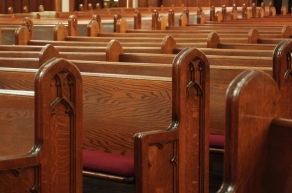
If the Constitution and Canons of the 1920s Episcopal Church were anything like what they are today, the prayers and rites of the 1928 Book of Common Prayer would have been vetted over 6-9 years. Which means they were largely written in the shadow of the 1918 influenza pandemic. It’s no wonder, then, that the 1928 BCP includes this prayer, In Times of Great Sickness and Mortality:
O Most mighty and merciful God, in this time of grievous sickness, we flee unto thee for succour. Deliver us, we beseech thee, from our peril; give strength and skill to all those who minister to the sick; prosper the means made use of for their cure; and grant that, perceiving how frail and uncertain our life is, we may apply our hearts unto that heavenly wisdom which leadeth to eternal life; through Jesus Christ our Lord. Amen. (The Book of Common Prayer, 1928, page 45).
Continue reading...

How can our congregations do effective outreach while the COVID 19 pandemic makes social distancing necessary?
How can our congregations contribute to controlling the Coronavirus?
These are two important questions to ask and answer during the current pandemic (and there are likely many more)...
First, ground yourself in hard data from reliable sources about Coronavirus and COVID19: What is it? What does it do? How does it spread? How can people both protect themselves from the virus and avoid spreading it to others? How do you know you might have it? What do you do if you think you do? What COVID-related resources are in your area?
Reliable, data-grounded sources and resources include:
Continue reading...

In our previous post we talked about how a faithful response to the current pandemic involves more than simply live streaming worship services (congregations do not live by worship alone), but involves finding creative and experimental ways to do and be all the things that churches (and other faith communities) are supposed to be and do, and especially how we exercise our “burden of care” to our neighbors and neighborhoods. And that our responses may ultimately lead to our congregations and the communities they serve surviving and thriving together.
Subsequent posts will deal with each of those things in turn. But let’s start with what we learned from our recent experiment with online worship (last Sunday), in cooperation with Church of the Ascension in Gaithersburg, which reached 51 people on Zoom and 900+ on Facebook Live.
So what did we learn?
Continue reading...

The COVID19 pandemic is not the first time Christianity has been faced with the moral question of how to respond in the face of pandemic. In fact, the question is nearly as old as the Church itself. One of the first times was during the third century Roman plague. Something likely akin to Ebola, the so-called Cyprian plague (after Bishop Cyprian of Carthage) which ravaged the Empire from 250-270 CE.
Just as they had in the Antonin plague of the second century, the powerful and well-to-do of the Empire fled the cities for the relative safety of their countryside villas, leaving the rest of the populace to fend for themselves. As attested to by both Christian and secular writers of the time, just as they did in the previous plague, the Galileans (as they were called) did the opposite, staying behind and even coming in from the countryside to feed the poor, care for the afflicted, comfort the dying, bury the dead, and to attend to public hygiene, doing this not just for the faithful but for their entire communities, Christian and non-Christian alike. It was, as Bishop Cyprian put it, their burden of care. Two remarkable things happened: they helped curb the contagiousness of the plague (the death rate was as much as 50% lower in cities with Christian communities) and the plague (or rather their response to it) helped make Christianity extremely contagious, so that it spread rapidly throughout the Empire.
Continue reading...

Ecclesiastes 3 tells us that “there is a time for everything, and a season for every activity under the heavens,” including, “a time to embrace and a time to refrain from embracing.”
Yes, this is a time to refrain from embracing. But what else does this scary time of COVID-19 offer to those in church leadership?
Continue reading...

The Episcopal News Service recently reported that the “2018 parochial reports show a 17.5 percent decline in baptized members and a 24.9 percent decline in average Sunday attendance across the church between 2008 and 2018….If the rate of decline experienced over that decade continues, The Episcopal Church will have no Sunday attendance in 30 years and no baptized members in 47 years.”
“It depicts a church that appears to be dying,” said Kristine Stache, interim president of Wartburg Seminary.[1]
Here’s a very simple question: Why can’t a good group of great people grow their church and get awesome stuff done? The Episcopal Church has many excellent clergy and lay leaders. Plus, we have deep resources. Why is our church dying?
[1] Egan Millar, “Executive Council approves readmission of Cuba, selects Louisville for 2024 General Convention” The Episcopal News Service, 17 February 2020 https://www.episcopalnewsservice.org/2020/02/17/executive-council-approves-readmission-of-cuba-selects-louisville-for-2024-general-convention/
Continue reading...

Dear Friends,
In this time of great fear, anxiety and uncertainty, I offer you the following words of comfort:
Do not fear, for I am with you, Do not be afraid, for I am your God;
I will strengthen you, I will help you, I will uphold you with my victorious right hand.
Isaiah 41:10
The COVID-19 infection is spreading rapidly and impacting all aspects of our daily lives. While there are a lot of unknowns, ECF, like other Episcopal faith communities, is following the advice and directives of our federal, state and local authorities, including those relating to “social distancing”. Our immediate priority is the health and safety of our staff, clients and other constituents while we plan on ways to minimize long-term disruption to our work and our ongoing mission to the wider church. To that end, we are encouraging employees to work from home, postponing gatherings and other events and imposing a moratorium on all travel.
Continue reading...
 RSS Feed