
In August 2019 we commemorated the Quadricentennial (400, 3:00 pm, in remembrance of this critical date. There were also events in Ghana celebrated as the “Year of the Return” encouraging visits to the place of origin for many African-Americans. I also visited Jamestown this summer and learned a lot more about our American history including the critical role of the church in the chaotic times of the countries’ formation.
Commemorations are also very important in our church life, regardless of whether we are celebrating a tragic or happy event or flawed or heroic individuals. The church has provided us with liturgical resources including Holy Women Holy Men, and more recently A Great Cloud of Witnesses to highlight the many individuals who through their lives have furthered the ministry and mission of the church. Many churches do commemorate their own patron saint, however so many more can be explored and utilized from our church history.
Continue reading...

In 2017, I had a client in the midst of a Feasibility Study when their beloved Rector was elected to be a Bishop in another Diocese. One would think this would mean the end of their hard work toward a campaign, but it came at the right time. The personal interviews had been completed but the majority of the parish had not been invited to respond to the survey. Because of this, their report provided a true picture and temperature for moving forward with the campaign.
While there was some concern, the overall theme of the report was that they could move forward and had the potential to raise just over $1 million for the projects that were under consideration. What the Vestry needed to do then was decide how they would move forward. They had the good fortune to have a strong committee and an outgoing Rector who both wholeheartedly supported moving forward into the solicitation phase of the campaign.
Continue reading...

This month we offer five resources on evangelism. Please share this digest with new members of your vestry and extend an invitation to subscribe to ECF Vital Practices to receive Vestry Papers and the monthly digest.
1.Does your congregation yearn to bring others into church but are not sure how? In Evangelism for the 21st Century, Day Smith Pritchartt from the Episcopal Evangelism Society shares stories of some of the projects she’s worked on to serve as inspiration.
Continue reading...

In most faith communities, prayerful planning and preparations are about to launch annual giving campaigns. Many people frame this as “the time of asking for money.”
Thinking of the annual campaign as an invitation rather than “an ask” puts a different frame around the picture. An invitation generally means a request to join someone in doing something.
An invitation transforms a polite ask (“Please submit your pledge card because the church needs your support”), into a personal recognition that we’re all in this together: “We invite you to join us – the Stewardship Committee, Vestry and our Clergy - in making a financial commitment to St. Stephen’s for next year.”
Continue reading...

In the Great Litany, prayed by many on the first Sunday in Lent each year, we ask God to deliver us from dying “suddenly and unprepared.” And while our culture seems to value a quick and painless death, the church understands the grace and the opportunity made possible by a prolonged dying process. Tortuous as slow decline and diminishment can be, it can allow for a faithful preparation — reconciliation with friends and family, a time to express fears and to be offered healing, a time to get financial and legal affairs in order, a time to celebrate the life given. Much of this is to be done by the person who is dying and by the closest members of their family, when possible. But the church can help. Indeed, sometimes the church can take the lead.
Tom told me of his cancer diagnosis on a beautiful sunny afternoon over a cup of coffee and a sinfully delicious cookie. If he went with the chemo, his doctor had told him, he’d maybe have six months to live.
Tom had been a founding member of the Advocate. He was our first senior warden, and our seventh. He was a steady presence in our rocky first decade. The congregation reeled at his diagnosis. And we wanted to honor him before he died.
Continue reading...

This month we offer five resources on transformative stewardship. Please share this digest with new members of your vestry and extend an invitation to subscribe to ECF Vital Practices to receive Vestry Papers and the monthly digest.
1. Do you hear ‘stewardship’ and think ‘fall pledge drive’? In Transformative Stewardship Calendars, Chris Harris presents different ways to bring stewardship into your parishioners’ lives through the church calendar year.
Continue reading...

In my role as a capital campaign consultant for the Episcopal Church Foundation, it’s not unusual to hear Vestry leaders hoping for grants to help pay for building improvement projects because…
“We serve our city in unique ways.”
“Our building is historically significant.”
“Our feeding ministry serves the broader community.”
Yes, but, in the world of grant-giving, the stark reality is that your congregation may not be all that special. When you identify a granting organization that will allow a church to apply (many don’t), expect the competition to be steep from established not-for-profit organizations. Agencies that provide food, clothing, health care, or other services as their main mission have honed their compelling “case statements.” A church that serves a community meal once a week or a free clinic once a month may be deemed to have a weaker case.
Continue reading...

This article is also available in English here. Este artículo está disponible en ingles aquí.
Hablar de crecimiento espiritual no es una tarea fácil. Es un tema que se puede mirar desde un sin número de perspectivas porque lo que funciona para una persona, no necesariamente funciona para la otra. Sin embargo, todos podemos estar de acuerdo en que queremos crecer espiritualmente; tener una vida espiritual más rica y profunda. Lo difícil es descubrir cómo lograr ese tan deseado crecimiento. Especialmente si somos parte de algún grupo minoritario.
Si eres miembro de la comunidad LGBTQI+, una minoría racial o de género, sabes de lo que hablo. No es fácil crecer cuando se está tratando de sobrevivir y cuando además, estás buscando cómo sanar las heridas que muchas veces nos ha causado la religión y/o alguna iglesia.
Continue reading...

Talking about spiritual growth is not an easy task. It is a topic that can be viewed from a number of perspectives because what works for one person does not necessarily work for another. However, we can all agree that we want to grow spiritually; have a richer and deeper spiritual life. The hard part is discovering how to achieve that much-desired growth. Especially if we are part of a minority group.
If you are a member of the LGBTQI+ community, a racial or gender minority, you know what I'm talking about. It is not easy to grow when you are trying to survive and when you are also trying to heal the wounds that were caused by religion or a church.
In my opinion, the first thing is to stop justifying our existence before those who deny our humanity. The Bible has been used to oppress women, the LGBTQI+ community and those of us who are not white. Putting ourselves on an equal footing is very exhausting. The best thing is to rest in the love of God, being sure that God loves us just as we are and created us as God’s sons and daughters.
Continue reading...

Most people prefer not talking about death. Consequently, most people die without a written will. So what happens then?
If you don’t have a will the state has already written one for you. And guess how the state will distribute your assets after you die? Lawyers are first in line, of course. Then taxes, creditors, and finally loved ones. Nothing goes to charity.
Also, your survivors get to pay the maximum in estate and inheritance taxes.
With a will you control applicable taxes, you determine what charities you want to be part of your legacy. You release your family from unnecessary turmoil and delay in settling your estate.
Continue reading...
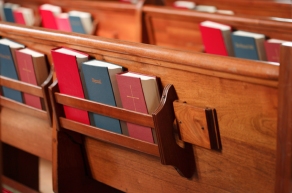
Most of us who are in the Episcopal Church have a love of the liturgy. Or at least an appreciation for it. Some are well-versed in the meaning of the movement and the posture, the theological nuance of the words. Others have been formed by decades of weekly practice, the words of the canticles still rolling off the tongue, the Prayer of Humble Access still echoing in our soul.
But there are many in our pews and chairs who are still learning the rhythms of the liturgy. They know that there are songs, readings, the Peace and the Eucharist, and that the clergy come in at the beginning and go out at the end. But they don’t even think about the idea of being formed as the Body of Christ. Maybe they have a grasp of the liturgical year, but they still think of Pentecost as the day we wear red. And, increasingly, they are likely to attend about once a month, so may only get one Sunday in the shorter seasons. They will not have the continuity and repetition that leads to learning.
Continue reading...

I have been privileged to hear many personal stories about the deep commitment people feel toward their parish. I remember a young woman recounting when she became a single parent and how her parish rallied around her providing on-going emotional support, as well as sometimes buying diapers and assisting with baby-sitting her daughter. To this woman, her parish literally became her support network and extended family.
In every workshop I do on legacy giving from one’s estate, there is one I phrase I say consistently: “When someone makes a planned gift of any kind to their parish, that person raises their congregation to the level of family in their estate plans”. Such a gift demonstrates that someone believes so strongly in the mission and ministry of his/her parish, that they would elevate them to the same status as one of their children or grandchildren for the eventual distribution of their worldly goods. Such a gift is not a simple token but demonstrates tremendous passion and conviction for the future ministry of the parish.
When someone makes this choice -- whether a bequest, remaining IRA balance, insurance policy or residuum of a Charitable Remainder Trust or Gift Annuity – that person offers a testimony: “I want to support my parish’s future ministry and to continue to participate in the mission which became so vital during my lifetime.”
Continue reading...

My grandfather’s bedtime prayer was the Apostles’ Creed. Knowing that it held this special place in the heart of the man who held a special place in mine made me pay close attention to the words, regardless of the setting, throughout my life. I grew up in the Presbyterian Church, and the Apostles Creed was part of our weekly worship. Nonetheless, for me it was always a love-laced prayer.
Years later, now an Episcopal priest, I am often aware of a contrasting experience of the Creed in liturgy. First, it is the Nicene Creed rather than the Apostles. I know the Apostles Creed is the creed of baptism, and therefore more personal, and the Nicene Creed is more corporate, the “faith of the Church”, meant to be said by the whole congregation. It’s not a prayer.
Liturgically, The Nicene Creed follows the sermon (and sometimes serves as a corrective to the sermon!). It usually begins without introduction, beyond, in some places, an invitation to stand. It is a proclamation, declared with boldness by those gathered, kind of like a pledge of allegiance. This is what we believe!
Continue reading...

Whether in capital campaign mode or not, annual giving is the primary source for funding the annual budget for most churches. Here are ten actions taken by churches that resulted in real increases in annual giving:
Continue reading...

The patch was rough. Three years after the old man who had lovingly tended the south five acres of the site for decades had moved to Florida, The Church of the Advocate acquired the land. Three years after that, we finally had a building in which to worship on the land. But having rented worship space for 11 years, it took us a while just to recover from all the transition and to settle into the reality of having our own place. We didn’t pay very much attention to what was growing where. We just tried to keep some of the grass mowed.
Soon, however, it became clear that the grounds just weren’t as pretty as they had been. Invasive plants had moved in, aggressive natives, like honeysuckle, sweet gum and pine had started growing like weeds. We had been clear from the beginning that the site was to be shared with anyone who came our way, whether they wanted to be part of the church or not. And wonderfully, one person who came our way was an amateur horticulturalist, a woman passionate about restoring land to native flora and fauna. We got to talking.
Continue reading...

St. Mark’s Episcopal Church in Medford, Oregon, will dedicate their new parish center on Saturday, July 27. This new building will welcome all who see it, day or night, with an accessible drop-off area leading to an elevated courtyard. From there, visitors will access the church entry, relocated parish offices, or the new Parish Center. Inside the facility, an elevator to all floors, clear signage, and flexible space will improve the experience for everyone, whether they are a child in Sunday School, a mid-week volunteer, or a member of the community visiting us for a meal.
St. Mark’s has been working toward this occasion for many years, and the Capital Campaign was just the final piece of a complex puzzle that made this day possible. Vision, planning, saving, investing, risking…all played major roles in leading up to this day.
Continue reading...

Last time we started talking about practices to build our confidence around evangelism.
There’s a good basic list of resources available on the Episcopal Church’s website. One of those great resources is a “Prayer Walk.” Prayer walking is a great starting point, but I think walking can do much more.
There’s a term, “walk-up evangelism,” which is the type of evangelism many people think about. You walk up to someone and start telling them about Jesus (or telling them that they need Jesus). That’s not what I propose. What I’m talking about is “walk-around evangelism.”
Continue reading...

The resident in the church house was getting tired of cleaning up the mess left behind by field mice in the kitchen. She also wanted some company. So she asked if the church might get a cat. The altar guild was having similar challenges with mouse detritus in the sacristy and was ready to support the idea. With the altar guild on board, the vestry was quick to assent.
The resident and I started visiting the local animal rescue. We knew that any cat we adopted would need to be tolerant of kids, so once we narrowed the possibilities down to two or three, we invited a 5 and 9-year-old from the church to go with us. Each cat was given the kid test for playful interaction and kindness.
The result was Smoke, the Advo-cat.
Continue reading...

This month we offer five resources on strategic thinking. Please share this digest with new members of your vestry and extend an invitation to subscribe to ECF Vital Practices to receive Vestry Papers and the monthly digest.
1. Do you know the difference between your congregation’s mission and vision? In his webinar entitled Strategic Thinking for Congregations, Donald Romanik talks about the ever-increasing pace of change and how strategic thinking can help congregations effectively plan for the future.
Continue reading...

For many years, books about healthy congregations focused on how to do what we’ve always done better, or at least in a more attractive way. One book capturing attention today asserts that what we’ve always done is not likely to work, no matter how well we do it.
Canoeing the Mountains: Christian Leadership In Uncharted Territory, by Tod Bolsinger, takes a frank but hopeful look at the opportunities for adaptive leadership within the church today. The title is a reference to the ways that explorers Lewis and Clark had to adapt to the unexpected reality of the Rocky Mountains as they sought a riverway to the Pacific.
Continue reading...
 RSS Feed