
Episcopalians love to use the word “parish,” as in: ‘parish meetings’, or ‘parish ministry’ or, simply, ‘my parish.’ But as the great Inigo Montoya said in 1987’s The Princess Bride: “You keep using that word. I do not think it means what you think it means.”
For starters, it’s a sweet sounding word. It takes us back to a time no one alive ever enjoyed, although it’s nice to think that someone, somewhere did once upon a time. It sounds simple, pastoral, peaceful, lovely. Etymologically (Wikipedia tells me), it has something to do with living together, “sojourning in a foreign land” (thanks, Wikipedia), and it emerged in the English language right around the time the Church of England parish system also emerged – sometime post-12 century.
This was driven home for me when I was serving as curate (yet another sweet Episcopal word) in a bustling city in a rather large parish, er, congregation. I must’ve mentioned the word when a parishioner – aha! there it is again – said to me, “You keep using that word, ‘parish.’ But that’s not what this is. This is a church and we are a congregation.” At the time, I thought it was an odd response from a relatively cranky worshipper. In the ensuing years, however, I’ve come to realize how spot-on she was. We keep using the wrong word for what we’re really trying to describe. Even worse, I believe our common life has inspired us to actively choose the wrong word – not because we don’t have other words but because it subtly removes levels of personal responsibility for claiming our present moment in leadership. It doesn’t help, and it only furthers my case that the line drawing of that same congregation – a busy urban church set in an active, people-packed neighborhood – features none of the neighboring high-rise dwellings; no cars, no people, no busyness whatsoever. In fact, there’s a grove of trees where streets actually exist – and have always existed, long before that church was built! – suggesting that it’s set somewhere in a field in the countryside.
Continue reading...

Come Holy Spirit and kindle the fire that is in us.
Take our lips and speak through them.
Take our hearts and see through them.
Take our souls and set them on fire. Amen.
“Now the eleven disciples went to Galilee, to the mountain to which Jesus had directed them. When they saw him, they worshipped him; but some doubted.”
Not long after I was elected Bishop of Kansas, I was in a small coffee shop not far from Coffeyville, Kansas. There I sat, resplendent in my sincere suit, brand new purple shirt, and the shiny new pectoral cross generously given to me by my former parishioners at Saint Michael and All Angels, in Dallas, Texas. The cross, modest by Texas standards… was very likely the largest golden object in Southeastern Kansas at the time.
Continue reading...

Earlier this year, our Board of Directors adopted the “ECF Compass” – a rearticulation of our Purpose, Mission and Vision. This document also highlights who we are, what we do and how we do it. In addition to describing ourselves as Episcopal, Independent and Lay-led, we also state that ECF is inclusive, i.e, “we are anti-racist and committed to social justice, equity, diversity and inclusion.”
While the process does involve an important missional and strategic conversation, it is fairly easy for an organization to make bold statements about who it is or hopes to be. The challenge becomes whether these articulations are more aspirational than actual. When it comes to being Episcopal, Independent and Lay-led, ECF has a long track record of demonstrating and living out these core qualities of our identity. When it comes to being Inclusive, or more specifically Anti-Racist, we have a much longer way to go. Clearly, our commitment in this area is aspirational but, at the same time, very sincere..
Continue reading...
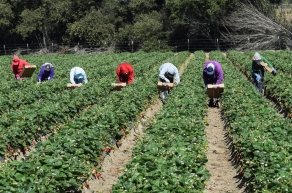
Pineapples were on sale at the supermarket this weekend in Memphis.
Let’s pause for a moment to consider how ridiculous that is: A springtime fruit from the tropics was on sale in the fall… in October… in Tennessee. (If we are looking for evidence that we live in a globalized world, I think we have found it!)
These cut-rate pineapples were brought to us by technology that says we can have almost anything almost anywhere at almost any time. Similar technology says we never need to experience anything but comfortable temperatures and low humidity all year ‘round – another unnatural feat for Memphis!
Continue reading...

This article is also available in English here. Este artículo está disponible en ingles aquí.
Cuando era chica, yo iba a la iglesia en México con mi mamá y mi hermana mayor. La misa era en español y en la frontera de Arizona, EE. UU. y Sonora, México. A los años, empezamos a ir a la iglesia en los EE. UU. y mi papá y mi hermana mediana nos acompañaban. Esta misa era en inglés y aunque conocía a otros jóvenes en esta misa por que íbamos juntos a la escuela, el idioma de inglés me constaba en la iglesia. Soy criada en los EE. UU. y toda mi educación ha sido en inglés, pero mi idioma con Dios es en español.
Cuando llegué a la universidad en el noreste de los EE. UU., buscaba oportunidades para oír español. Iba a la mesa donde se hablaba español durante el almuerzo, al grupo de Latinas los jueves en la noche, donde muchas hablábamos español, y oía la música en español en mi residencia. Cuando mi comprometido y yo decidimos casarnos en el noreste de los EE. UU., al fin de mi carrera en la universidad se nos complicó el proceso porque los dos fuimos criados en la iglesia en español en México y el oeste de los EE. UU. ¡Dios proveyó por nosotros un clero que hablaba y cantaba en inglés y español en mi universidad! Era un clero de la Iglesia Episcopal y él fue quien celebró el rito de nuestro matrimonio. ¡Hasta cantamos “De Colores” durante nuestro servicio! ¡Qué gusto!
Continue reading...

This article is also available in Spanish here. Este artículo está disponible en español aquí.
As a girl, I went to church in Mexico with my mother and my older sister. The mass was in Spanish and on the border between Arizona, USA, and Sonora, Mexico. Some years later, we began attending church in the U.S. and my father and middle sister would go with us. That mass was in English, and although I knew some other kids in that church because we went to school together, the English language was hard for me in church. I was brought up in the U.S. and all my schooling has been in English, but with God, my language is Spanish.
When I went to college in the Northeastern U.S., I sought out opportunities to listen to Spanish. I sat at the Spanish table at lunch time, on Thursday evenings I attended the Latina group, where a lot of us spoke Spanish, and I listened to music in Spanish at home. When my partner and I decided to get married in the Northeast after I completed college, the process got complicated because we had both been brought up in the Spanish-language church in Mexico and the western U.S. God provided us with a clergyman who spoke and sang in English and Spanish at my college! He was a clergyman from the Episcopal Church, and he was the one who presided at our wedding. We even sang “De Colores” during our marriage service! It was so great!
Continue reading...

A few years ago, I had a disagreement with a colleague about the Bible. To him, the most defining moment in the life and ministry of Jesus was when he turned over the tables of the money changers in the Temple. (Mark 11:15) That outpouring of righteous anger and his passion for justice were expressions of the power of Jesus to change the world. No doubt about that.
What speaks most powerfully to me, however, is the prayer of Jesus in the Garden of Gethsemane, on the night before his Crucifixion. He’d just enjoyed a last supper with his disciples, saying as he blessed the bread and wine, “this is my Body… this is my Blood.” (Mark 14: 22, 24) He knew that one of his closest friends would betray him to the Roman soldiers. In that last hour before his gruesome fate unfolded, he went off by himself in the garden to pray.
Continue reading...

This month we offer five resources on multi-cultural congregations. Please share this digest with new members of your vestry and extend an invitation to subscribe to ECF Vital Practices to receive Vestry Papers, blogs, and the monthly digest.
Continue reading...
Topics:

"Lead me where people need your words, need my enthusiasm for life; where hope is faint, where joy is scarce, just because they do not know You. I give you my sincere heart to express without fear your greatness, Lord. I will have tireless hands, your story between my lips, and strength in prayer." Alma Misionera is a Spanish song from the Flor y Canto hymnal, and this is part of the English translation. These words were fundamental in cultivating my family's spiritual identity as a whole and my understanding of what it means to mean to a baptized person within this community of faith.
My story begins with my father, Rev. Simon Bautista Betances, an Episcopal priest, alongside my remarkable, devout, trailblazing mother, Amarilis Vargas Bautista. Who together built a loving, fun, creative, respectful, faith-filled, justice-oriented family who were raised to be proud of our Latino heritage and African descendants. Church for the four Bautista children wasn't a bore or a thing we "had" to do just because our father was the Priest. Instead, we marveled at being part of different diverse communities of faith where we were so loved, cared for, and welcomed. We were known as the "missional family," wherever my Dad was called to serve, the Bautista party of six served alongside him. Early on, my curiosity towards the Holy Trinity's mystery and who God was calling me to be settled in. God's calling began when I served as an acolyte at the age of nine years old, and in the moments where with my family, we would pray for the healing of one of our beloved church members. In those moments, I felt a yearning to learn more about this gracious and Holy God. When I could share God's Good News with the campers at City Camp in Philadelphia, I was left restless with how I am called to be part of God's hands and feet on Earth.
Continue reading...

Some things just don’t mix: Oil and water, bleach and ammonia, churches and debt. Or, so I have always believed.
We have all heard stories about churches that got in over their heads with debt. We have all heard stories about churches that planned on resources becoming available, either because of congregational growth or forthcoming generosity, only to find themselves disappointed and overleveraged. Churches just need to stay out of debt. Or, so I have always believed.
My own congregation recently completed a major capital restoration project. We said from the beginning that we were not going to spend any more than we raised. And, while we did make some exceptions along the way, we generally stuck to it. The overall gap between our actual capital expenditures and our total pledged revenue was only about 5%.
Continue reading...

We have all been on many Zoom services over the last year, either at our own church or other congregations near and far, and the observation is there were few to no youth on these Zoom services.
Further, in discussions about the challenges congregation face in the new virtual or hybrid (in-person and virtual) environment, the lack of youth presence is highlighted as a major issue that had not been adequately addressed.
Concerns were as follows:
Sunday School Teachers and Youth Leaders need new or updated skillset for this virtual environment to better engage with the youth. They need resources to share issues confronted and receive best practices to move forward successfully.
Continue reading...
Pregnancy can be miraculous. When through an act of love a woman and a man join with the Creator in bringing new life into the world, it’s a gift from God. Advances in the science of fertilization, which can extend this process to more people, reinforce the breathtaking wonder of it all.
The manner in which a fertilized egg develops into a living, breathing person draws together a thousand tiny miracles: rapidly dividing cells specializing into fingers and nerves and a beating heart and so much more. Science can document this amazing growth: the first grainy images my wife and I saw of our grandchildren were sonogram photos, taken on their mothers’ bellies. While it wasn’t obvious what we were seeing, the awesome significance was clear.
Continue reading...

Imagine that you had a time machine.
Imagine that you could travel back in time and talk with the leaders of your own congregation two or three generations ago. Imagine that you could give advice to your predecessors in a time when sustainability was assumed, pews were full, and every Sunday school was teeming with children. What would you say?
I spent my recent sabbatical asking this question of church leaders in highly secular contexts. My goal was to learn what congregations that are currently in positions of strength might do now to prepare ourselves for a future ministry context that will likely look very different from the one we now know.
Continue reading...

This month we offer five resources on stewardship and abundance. Please share this digest with new members of your vestry and extend an invitation to subscribe to ECF Vital Practices to receive Vestry Papers, blogs, and the monthly digest.
Continue reading...

Dear friends,
For over a year, we as a church, a nation, and a world have been challenged like never before. But as people of faith, we are confident that God is in our midst and that nothing can separate us from God’s love. I have been amazed and encouraged by the creativity, resiliency and flexibility demonstrated and witnessed by Episcopal faith communities like yours. Our congregations have embraced new ways to worship, gather and engage with our local communities. And throughout this entire period, the Episcopal Church Foundation (ECF) has been there with you - striving to live into our mission of leading Episcopal faith communities into the future as a partner for transforming ministries. We did this by nurturing, supporting and inspiring lay and clergy leaders throughout the church.
Continue reading...

My grandfather and I are different kinds of investors.
Grandpa’s investment portfolio was comprised largely of equities and he knew something about each of the companies whose stock he held. When he moved to a new town, he was likely to buy several shares of the company that employed the most people there because he wanted to invest in his community. By contrast, my investment portfolio is a carefully managed collection of mutual funds. I would be hard-pressed to tell you what companies are represented, what they do, or where they are. My strategy is focused on outcomes, on projected return and estimated risk.
My grandfather and I are also different kinds of charitable givers.
Continue reading...

Early this summer, the Church of England’s Vision and Strategy group released a plan addressing the continuing decline in church attendance in England and proposing a path forward for growth and vibrancy. The plan calls for the planting of an ambitious number of churches - 10,000 by 2030 to be exact - that would be predominantly lay-led. The release of this plan hit a very tender spot when it targeted educated, ordained leaders and beloved ancient church buildings as “limiting factors” that are holding back the growth of the church. Following the release of this plan, a social media maelstrom ensued, wounded clergy people cried out in pain, and a movement called “Save the Parish” began to defend parochial structures and fend off the “emergence of a church … not want(ed) or need(ed)” (The Rev. Marcus Walker, Spectator Magazine 8 July 2021). An ocean away, I watched it all unfold on my laptop, feeling ripples of resonance in the diocese that I serve in The Episcopal Church.
Continue reading...

Stewardship sermons and testimonies offered through the years eventually sunk in, causing me to prayerfully consider how much I give back to God and why I do so. I think I’ve reached a good place in my understanding and generosity, and I’m happy about that.
The opportunity to give electronically helped my giving too. It’s easy and convenient to make donations with a few taps on my computer or phone. When I started giving online, I felt a little squirmy on Sundays when the offering plate went by and I sat frozen in my pew, avoiding eye contact with the usher. But then my church added a new option on our pledge envelopes: a place to check “We/I gave this week online.” So now I can drop an empty envelope in the plate and smile assuredly at the usher.
Continue reading...

Many of today’s church leaders grew up playing Tetris. (Or, perhaps, watching their children play Tetris!) Tomorrow’s church leaders will have grown up playing Minecraft. Henry Timms and Jeremy Heimans suggest that the difference is more significant than it may seem because it reveals an important difference in how older and younger generations understand power.
“[In Tetris,] our role as players was very limited. Someone else had set the rules [and] we all played a version of the same game…Minecraft is an open world. It is up to players everywhere to decide what they want to create, and then they build them together, collaboratively from the ground up. There are no real rules to Minecraft…Everything there has been co-created by players of the game.”
Continue reading...

A regionally famous billboard along I-65 near Prattville, Alabama reads: “Go to church or the Devil will get you.”
Did a shudder just run down your spine? Mine too.
The billboard makes no mention of God or faith, of selflessness or devotion. Salvation is sold for the price of attendance. It calls to mind the famous words of Johan Tetzel that so troubled Martin Luther in the days before the Reformation: “As soon as a coin in the [church’s] coffer rings, the soul from purgatory springs.” While this billboard’s message feels too transactional for my taste, there are transactional elements to the relationship of the church and its people. People come to church looking for something and the leaders of sustainable churches need to know what that is.
Continue reading...
 RSS Feed